Introduction: Deadly Fungal Infections Reported in 27 States Coursework
Reports on the appearance of deadly fungal infections in the United States have triggered many questions due to this disease being caused by an unpredictable organism that is capable of invading the human body in a particularly insidious manner. In particular, the causative agent of this disease, Candida auris, a yeast, may be resistant to multiple classes of antifungal medications, may remain on the skin for months, may be found on environmental surfaces, and may spread rapidly in healthcare facilities.

Nevertheless, the headline is deceptive if one considers the case numbers that are now available from the US Centers for Disease Control and Prevention: the total number of clinical C. auris infections in the US was 6304 in 2024, and the number of cases of this disease continues to rise every year since its first detection in the US in 2016. (
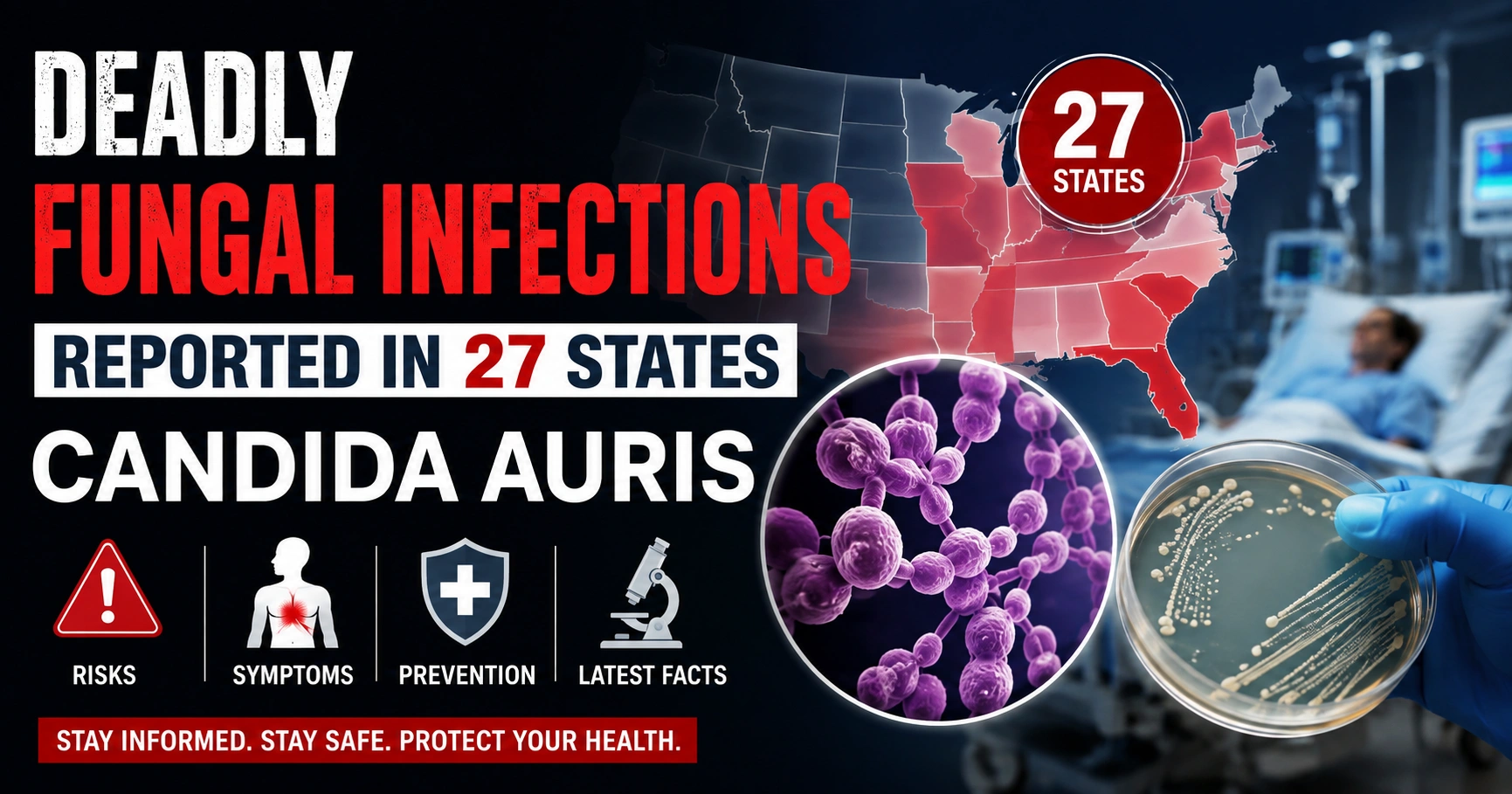
Hence, the reference to 27 states in the news release is simply the number of states in which the Candida auris yeast has been found – not that all those states have cases.
On the other hand, the latest CDC surveillance report on the state-level geographic dispersion of clinical cases of this disease proves that they are geographically concentrated in the U.S. Consequently, in 2024, the states with the most clinical cases of Candida auris were California, New York, Illinois, Florida, Nevada, and Texas, while there were also states in which no clinical cases were found.
In addition, for the vast majority of people who do not have a weakened immune system and do not have constant contact with healthcare settings, this type of infection does not pose any particular threat. The primary danger of Candida auris is for those who are already very ill and for people whose health is threatened by the presence of various types of invasive equipment.
Why Candida auris Is Receiving Attention
The C. auris yeast has garnered immense amounts of attention due to particular unique properties that make it especially concerning for the medical community. The microorganism can inhabit a human’s skin without causing any symptoms, transfer from one person to another through contaminated objects and surfaces, and exist in the body undetected until invading “vital organs,” according to the CDC.
Additionally, the Centers for Disease Control and Prevention refer to it as an “emerging fungus that can cause severe infections and is resistant to many antifungal medications.” Finally, another reason behind the scientific and public health communities’ interest in C. auris is that this microorganism can become resistant to treatment with pharmaceuticals designed to kill or shrink it.
The emergence of such resistance to antifungals is of particular concern to the world’s health organizations since antibiotics and other medications targeting certain bacteria can become ineffective as well. To the World Health Organization, some of the pathogens of the priority list belong to the genus of Candida and should be of the highest priority for surveillance. The only fungal species isolated were Cryptococcus neoformans and Aspergillus fumigatus, not Candida albicans.
What the 27-State Report REALLY Says
The figure of “27 states” does not mean that right now all of these states have had an influx of fungal infections. This statistic was reported previously when the number of C. Auris cases started surging across the country. Nonetheless, more recently, updated numbers were announced by the CDC to better represent the current situation.) According to the latest data, there were 6304 clinical cases of infection in the United States in 2024, and the number varied significantly from state to state.
This detail is essential because there is a considerable difference between clinical, screening, colonization, and infection rates and numbers. In other words, one should realize that a person can carry C. Auris and not be ill at all. Additionally, the way the cases are detected differs because the CDC utilizes two separate surveillance systems for tracking clinical occurrences of fungal infections and screening.
The reason why the numbers are different is that some patients might have been exposed to the infection but not diagnosed. Therefore, not all cases picked up by screening are confirmed ones. A responsible journalist should not forget that screening-positive patients are not necessarily infected, and thus such a figure should be handled with care. What is known for certain is that being colonized presents a risk of spreading the infection further and that fragile individuals can easily develop serious illness if exposed.
What Is Candida auris?
Candida auris (also known as Candidozyma auris) is a species of yeast. This yeast is different in its characteristics from many other pathogenic fungi, which are opportunistic in immunocompromised hosts or healthy individuals colonizing the skin and mucosa. These properties make it a serious hazard to patients who are already dependent on the hospital. According to the CDC, these infections are contracted in healthcare settings and usually invade the bloodstream, wounds, and ears, among other areas, depending on the infection site and seriousness of the case.
This species was initially identified in the United States in 2016; since then, it has disseminated across the nation. One of the most frightening features of C. auris is that it may live on skin for prolonged periods times without the carrier getting any symptoms. Therefore, it is considered more dangerous than, say, an ordinary hospital-acquired infection like “sick person spreads fungus”. This is because a person with no idea that they are carrying the infection can contaminate many surfaces, equipment, and other patients and hospital staff. Consequently, both infected and colonized patients must be isolated when suspected cases are detected.
Why C. auris Can Become Life-Threatening
The greatest danger occurs when C. auris causes an invasive infection, particularly a bloodstream infection. People who develop these infections are often already critically ill, so separating the contribution of the fungus from their underlying medical problems can be difficult. The CDC specifically cautions that many patients who become sick with C. auris were already very ill and that the organism’s exact contribution to a patient’s death can be difficult to determine.
This is an important point when interpreting alarming mortality statistics online. A frightening percentage does not mean that the same percentage of healthy people exposed to C. auris will die. Risk is highly dependent on the patient’s underlying health, the site of infection, the availability of effective antifungal therapy, and the organism’s susceptibility profile. To put it another way, the fungus is hazardous, but that hazard is not uniform across the population.
Spread of Candida Auris
An infection is when microbes breach the body’s defenses, enter the tissues, and multiply. Candida auris fungus is also risky, as it may persist on surfaces for a long time and lead to fatal infections. It’s thought to be spread by close contact with contaminated items, surfaces, and, possibly, people. It could also spread via healthcare professionals and contaminated equipment. According to the CDC, proper infection control measures must be taken since both infected and colonized patients contribute to the disease’s persistence.
Moreover, the presence of the infection in healthcare settings means that infection control procedures are critical in preventing its introduction and persistence. There is a high likelihood that the yeast will cause outbreaks in hospitals and long-term care facilities because they are home to large numbers of immunocompromised individuals, those with indwelling catheters, those with open surgical incisions, and those who have been bedridden for extended periods of time.
In addition, a fungus that can reside on surfaces and infect more susceptible individuals has the potential to proliferate quickly. The prevention strategies are more than just directing sick people to take their medicines. In addition, health care providers should use contact isolation, follow adequate hand hygiene, clean and disinfect environmental surfaces, use contact barriers, place patients adequately, and perform surveillance and screening in the laboratory.
The Most Vulnerable Populations
Hospitals have a distinctive nature, in which vulnerable people and various microorganisms come together at all times. One can observe a lot of people with catheters, central lines, ventilator tubes, surgical wounds, and other foreign objects in their bodies. A host of reasons, such as illness or medical treatments, could have weakened that person’s immune system.
The CDC recommends standard precautions when caring for C. auris — hand hygiene, care of central lines and catheters, isolating infected patients, and environmental cleaning. You need a gown and gloves to enter the room of an infected patient. Plus, visitors still need to wash their hands. All that advice and precautions may sound like too much, but they are what keep that deadly infection from jumping from patient to patient.
Who Is Most Vulnerable to Severe Infection?
The people who are at the highest risk are those who are, in fact, more vulnerable to any medical condition, not necessarily healthy individuals. C. auris mostly invades those who have extensive healthcare-associated exposure and severe illnesses. Therefore, the individuals at the highest risk are those who are hospitalized or immunocompromised and need invasive medical devices.
According to the CDC, the group of individuals who typically do not acquire the infection or colonization are those who lack exposure and do not have risk factors. This way, not everyone who reads the news about C. auris outbreak detection in dozens of states needs to panic. If you see them in a store or office or park, they are not likely to catch the dangerous germs that are now circulating among hospital patients.
But those at risk and their caretakers should not be overly frightened. People who have been screened for or diagnosed with C. auris and have been treated should tell healthcare providers about it at their next medical visit, because the bacterium can remain on the body for a long time. Symptoms and Signs of Candida Auris
Symptoms and Signs of Candida Auris
One of the issues with C. auris is that its symptoms are non-specific, so that the presence of C. auris infection cannot be reliably determined by the presence of symptoms alone. They appear based on the location of invasion in the body and can be confused with other bacterial or fungal infection signs. For example, symptoms of Candida auris infection include fever and chills when the infection is in the blood, as well as other symptoms related to the infected tissue. The symptoms vary depending on the site of infection, according to the CDC.
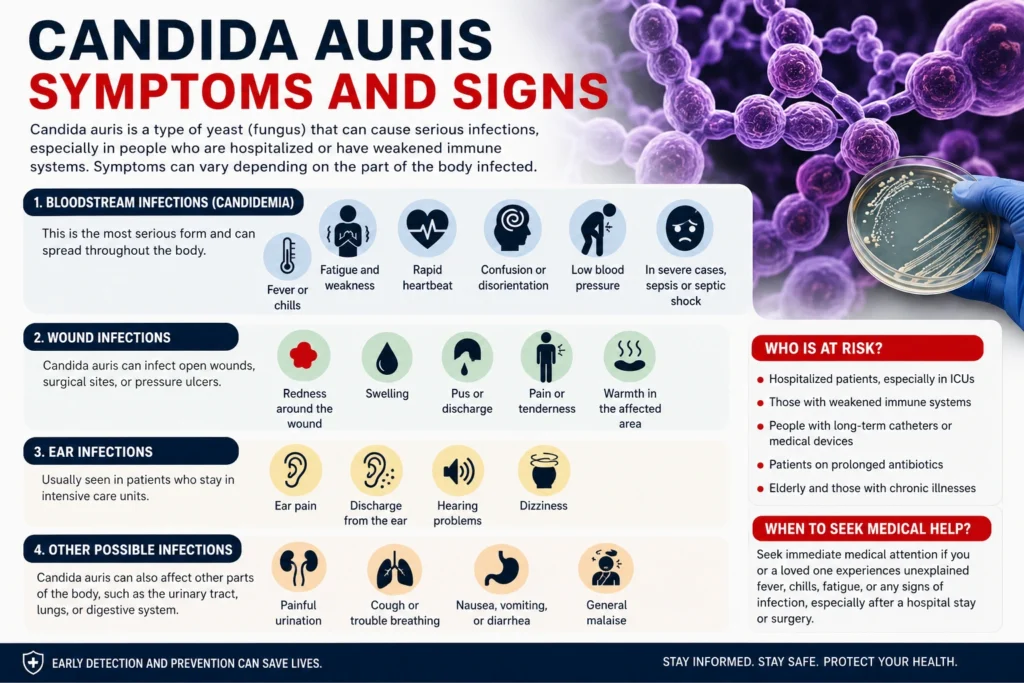
Hence, no single symptom can be used to detect C. auris. Fever is normal among inpatients too, and it can be due to a myriad of other factors. So, it’s not worthwhile to try to figure out if it’s an infection. That said, in the course of treatment of a patient, a sudden onset of fever together with the symptoms described above, such as shaking chills, lowering of blood pressure, or other similar symptoms, may be suggestive of a serious infection and necessitates urgency.
How Doctors Diagnose C. auris
The laboratory diagnosis of C. auris is critical since it can often be misidentified. According to the CDC, conventional yeast identification procedures can be wrong regarding certain isolates. In addition, this can affect infection control practices and treatment. Thus, when there is suspicion of C. auris, laboratories can utilize modern identification techniques or turn to the CDC’s Antimicrobial Resistance Laboratory Network for assistance.
At the same time, it is important to differentiate between screening and diagnosis of invasive infection. The latter usually involves the screening of facilities for colonization by the yeast. For example, hospitals might take samples from patients’ skin to find out if they need to be isolated. Such screenings are indicated when there is a risk that a patient can be a carrier, which is plausible in certain geographic locations. According to the CDC guidelines, such swabbing typically involves a composite sample of both armpits and the groin region. The purpose of the screening is not to identify the infected but rather those who carry the infection to ensure proper precautions are undertaken.
Why Accurate Laboratory Testing Matters
Imagine trying to stop a fire while looking at the wrong building. That is the problem inaccurate identification can cause with infection control. If C. auris was misidentified as another yeast, healthcare workers may not know to take extra precautions, screenings, and susceptibility testing.
Proper identification also helps doctors identify the correct treatment. Suspected isolates should be submitted to the AR Lab Network for identification and antifungal susceptibility testing, the CDC advises. Improved diagnostics thus serve two functions: aiding the individual patient and providing public-health teams with the information they need to monitor transmission.
Treatment Options for Candida Auris
The treatment of choice for the management of Candida auris relies on whether the infection develops in patients with signs and symptoms of clinical infection because there is no treatment recommended for colonization. This is particularly so for the CDC, which recommends that patients with colonization without signs or symptoms of infection should not be treated with antifungal medications. For most clinical forms of infection in adults and children older than two months, the preferred treatment is an echinocandin.
Candida auris infections are challenging to treat as some isolates are resistant to all or most available antifungal drugs. For instance, the CDC itself admits that a few strains of C. auris are resistant to all three classes of antifungal drugs. In such cases, it is best to manage the infection in consultation with experts who might recommend any of the newer approved antifungal drugs or combination chemotherapy.
Patients shouldn’t try to manage suspected cases of invasive fungal infections on their own, as treatment is complicated by the fact that antifungal drugs can affect nearly all body tissues. It is always advisable to leave such infections to the professionals because the choice of the drug, dosing, duration of treatment, and route of administration depend on several factors including the site of infection, laboratory results, age, and general health status, among other considerations.
R – Could Antifungal Resistance Be the Next Public Health Crisis?
Antifungal resistance is part of the reason that C. auris has spread globally and has become a public health nightmare. Fungus grows resistant. A fungus can become resistant, and a medicine that would normally stop it from growing no longer has an effect. That can turn a treatable illness into a far more difficult clinical problem — especially if the patient is already gravely ill.
WHO included C. auris in the critical-priority tier of its fungal priority pathogens list. The list was developed to stimulate research, enhanced surveillance, better diagnostics, and the development of new treatments for high-threat fungal pathogens.
This also explains why the “superbugs” headlines right now aren’t just part of some run-of-the-mill seasonal health news. Therapies for fungal infections: Therapies for fungal infections are less numerous than for bacterial infections. The WHO has underlined the unmet needs in diagnostics and for increased efforts in research and development for new antifungal drugs.
How Hospitals Can Prevent C. Auris Outbreaks
It is essential to note that there is more than one strategy needed to reduce and prevent the spread of C. auris. Handwashing is an integral part of the prevention measures and is the most critical infection-control measure. Another vital strategy is environmental cleaning, which removes organisms from surfaces and rooms. The isolation of affected patients together with gowning and gloving is also an effective way to prevent the spread of infection. Other methods include screening procedures in different settings depending on the situation in each hospital.
According to the CDC, there are infection-control measures for patients presenting with colonization or clinical infection. The point is that both asymptomatic colonization and clinical infection require screening since both can lead to transmission. For example, patients who seem healthy but are infected with C. Auris need to be placed in isolation because the infection can be transmitted.
In addition, healthcare facilities can apply surveillance to detect cases of infection. According to CDC’s screening recommendations, surveillance can help detect asymptomatic colonization and respond appropriately. Early detection gives an infection control team a chance to prevent the disease from becoming extensive.
What the Public Can Do to Reduce Risk
Outside of medical settings, there is no reason for alarm for the majority of the population even if C. auris is detected in several States. The best course of action is to practice good hygiene, as well as to follow the guidance and recommendations of healthcare professionals.
Those who are either hospitalized or have someone who is hospitalized and who requires intensive care should be especially mindful of hand hygiene. Those who visit such persons should wash their hands upon entering or exiting the establishment, as well as strictly follow hand hygiene guidelines that healthcare professionals give. Alcohol-based sanitizer is to be used when available, unless hands are visibly soiled; then soap and water should be used.
Most importantly, people should not try to self-treat if they think they have a fungal infection, and should ignore any “antifungal remedy” that isn’t backed by science. This includes essential oils, dietary supplements, certain diet changes, or other internet-based suggestions, as such measures are not likely to have sufficient evidence for treating an invasive fungal infection.
Candida auris versus Common Fungal Infection
A fungal infection is not always a minor problem. Some fungal infections are rather common, but others are life-threatening. Athlete’s foot, ringworm, and some infections caused by yeast do not pose any significant danger to the population. However, they are substantially different from the C. auris bloodstream infection.
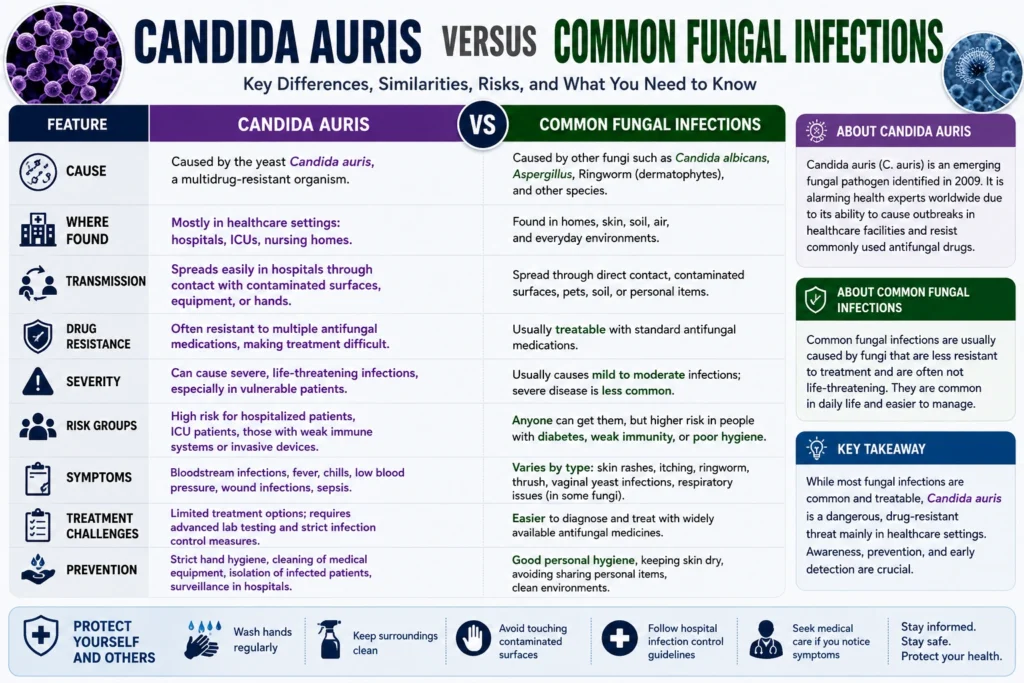
The most conspicuous difference lies in the fact that the latter infection is associated with several rather unique factors, including patients, the environment, the ability to spread, and the treatment outcomes. The issue of C. auris was included among the global health priorities by the WHO, which also reflects the general significance of the challenge posed by fungal infections, with treatment options that are difficult.
Feature: Common superficial fungal infection, Candida auris
| Feature | Common superficial fungal infection | Candida auris |
| Typical setting | Community | Primarily healthcare environments |
| Risk to healthy people | Usually manageable | Generally low without risk factors |
| Possible infection sites | Skin, nails, mucous membranes | Bloodstream, wounds, ears, and other sites |
| Drug resistance concern | Varies | Often significant |
| Healthcare outbreaks | Less typical | Major concern |
| Silent colonization | Depends on organism | Common |
| Infection-control importance | Usually limited | Very high |
Why Fungal Infections Are a Growing Global Concern
The attention to C. auris represents a shift in public health officials’ priorities. Fungal infections used to be regarded as uncommon and generally benign diseases. Experts, however, note that certain fungal infections are now becoming increasingly serious: both virulent and drug-resistant.
The WHO has drawn up a list of 19 species of fungi requiring urgent attention. The 2022 fungal priority pathogens list ranks them according to the level of research, clinical impact, and prevention interventions. The list was created because of the growing concern regarding the impact of these organisms on human health and the lack of treatment and prevention.
The issue with fungal infections goes far beyond C. auris. There is a complex set of reasons why these organisms are now a priority. The main problem is the combination of rising rates of infection, the presence of vulnerable populations, and the lack of treatments. These factors are exacerbated by the fact that some fungi are becoming resistant to existing antifungal drugs and the challenges of diagnosis. Researchers believe that improving surveillance, treatment, and infection control measures are critical areas for further study and investment. The study of C. auris is essential, and the attention to this particular fungus is a crucial step in improving the situation for other pathogenic fungi, too.
What Current CDC Data Tell Us
The latest CDC surveillance data is a wake-up call as of 2026. As we can see from the report, the CDC documented 6304 clinical C. auris cases in the United States in 2024. According to the state-specific surveillance data, there are different numbers of cases in each state, with California having the largest number of clinical cases (2557 clinical cases), followed by New York (2255 clinical cases), Illinois (2208 clinical cases), Florida (1956 clinical cases), Nevada (1740 clinical cases), and Texas (1452 clinical cases).
Thus, it can be concluded that the discovery of C. auris in multiple states is not necessarily an indicator that the fungus has started spreading in the United States, as suggested by this CNN article. Moreover, the cases of C. auris found in the United States are not related to the cases of invasive disease but instead reflect “clinical cases and therefore the potential for exposure to C. auris,” according to the CDC, as the official differentiates between clinical and screening cases and highlights the variance in surveillance practices applicable to each jurisdiction.
On a positive note, preventing the spread of C. auris is possible, as the CDC notes that the implementation of “recommended infection-prevention and control measures [helped] to stop further outbreaks soon after cases were identified.” Thus, it is essential to keep this critical point in mind while reading through this alarming article, as it highlights that C. auris is indeed a dangerous public health threat but is not an unstoppable and unmanageable problem.
External link
- CDC: Tracking Candida auris — current U.S. surveillance data and state-level clinical case counts.
- CDC: About Candida auris — risks, transmission, treatment, and prevention information.
- CDC: Preventing the Spread of C. auris — infection-control recommendations.
- CDC: Screening Recommendations — healthcare screening guidance.
- World Health Organization: Fungal Priority Pathogens List — international fungal-disease priorities.
Internal Link
For more information about emerging fungal diseases, their symptoms, risk factors, and prevention strategies, read our detailed guide on Deadly Fungal Infections Reported in 27 States.
Conclusion
The reports about fatal fungal infections in 27 states are indeed alarming, but, as it turns out, not without nuances. The microbe called Candida auris is a real challenge, as it can lead to severe infections that are hard to treat, especially in the context of people having serious health conditions. Moreover, it can thrive in a sick person without showing any particular symptoms, resist many antifungals, and inhabit surfaces. This makes it a concerning organism that has the potential to drive disease outbreaks.
As CDC reports on Candida auris point out, the situation in America is indeed of concern, with 6304 clinical cases reported in 2024, with high variability between the states. However, for the vast majority of people, the cases are not pressing. Unless one is in a vulnerable population, such as those with serious health conditions or those in a hospital, the chances of an infection are minuscule.
Meanwhile, there is nothing to worry about for the healthy populace. In fact, the main concern is for those with fragile health: people in hospitals have to be extra careful to avoid any infections as much as possible, especially in the context of C. auris being potentially drug-resistant.
Therefore, the only rational reaction to the reports is not to worry, but to take preventive measures when they are needed and follow the official recommendations. If one has severe health conditions or is at risk in any way, it is crucial to bring up the topic with one’s doctor and make sure the necessary precautions are taken. As for now, the information from the CDC Candida auris site is a good source to get an idea about the situation and the threat it poses; the same goes for WHO fungal priority pathogens.
FAQ’s
1. Is Candida auris a threat to healthy individuals?
This risk is significantly reduced for many individuals who do not present with any of the relevant risk factors. In fact, most, if not all, individuals without these risk factors are not likely to become infected or colonized, according to the CDC. Moreover, the microorganism is dangerous primarily for those who are already sick or have weak immunity. In addition, this species is particularly aggressive towards patients receiving healthcare services.
2. Can Candida auris be treated?
In most cases, it is curable, as doctors tend to give antifungal medications. The CDC states that echinocandins are the drugs of choice for C. auris infections. However, there are also treatment challenges; for example, some microorganism strains are resistant to most antifungal drugs. Note that doctors need to carefully select a preparation taking into account individual factors and test results.
3. Can C. auris be transmitted outside the hospital?
Although it can, this microorganism is primarily transmitted inside healthcare settings. This is why the CDC primarily monitors and prevents C. auris transmission in healthcare settings. It is important to note that these pathogens parasitize the skin and mucous membranes of both healthy individuals and those who are sick. In addition, it is transmitted through direct contact with infected persons and can even be transported and transferred via several surfaces and objects without being detrimental to them.
4. Do I need to be tested for Candida auris?
Not necessarily, because test results help doctors understand whether a person has this infection. According to the CDC, universal testing is not recommended because the microorganism was detected in several states. Remember that healthcare facilities design screening programs considering various factors. These include the likelihood that someone might have C. auris colonization or infection, as well as the purpose of screening.
5. How can medical professionals prevent its transmission?
They can do this by using protective equipment, strictly following hand hygiene rules, and other measures. According to the CDC, health care professionals should implement core prevention measures. These are hand hygiene, patient placement, use of personal protective equipment, environmental cleaning and disinfection, screening, and surveillance. These measures are necessary for patients with both types of infection, as they can transmit the microorganism further.