
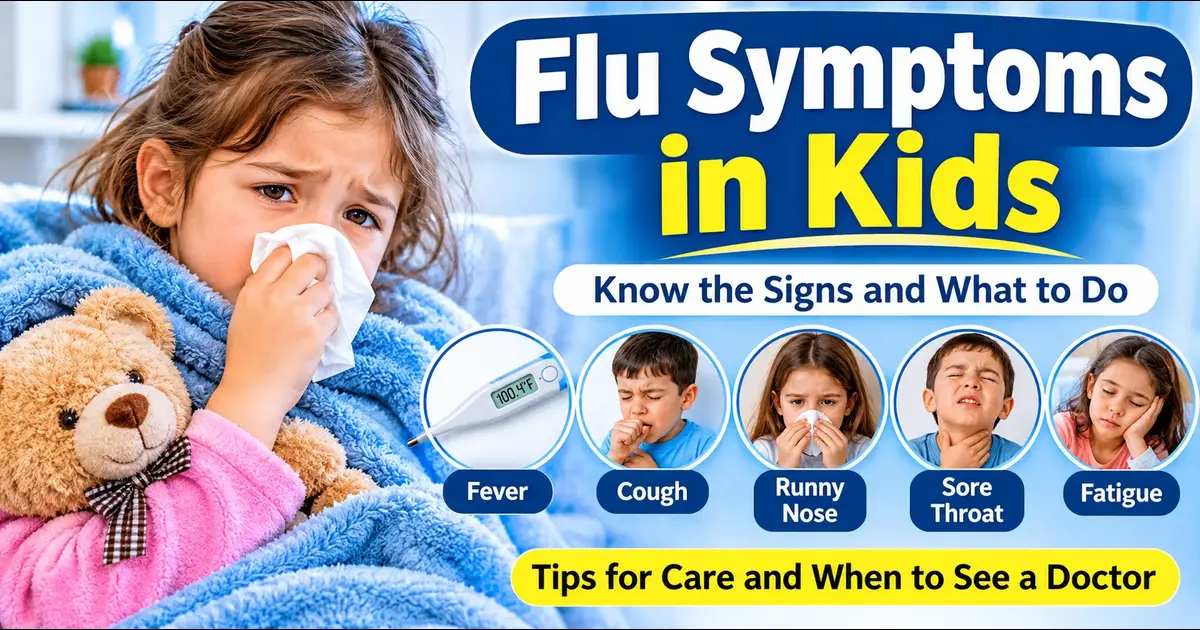
Flu in children often starts suddenly with fever or chills, cough, sore throat, aches, headache, a stuffy or runny nose, and fatigue, though some children have no fever. A fever can reach 103-105°F, but the number alone does not show how sick a child is. Symptoms can look different from one child to another, so your child’s overall behavior matters too.
When your child becomes ill, it can be hard to tell whether home care is enough. Severe breathing problems or unusual responsiveness need urgent attention. You can use the signs in this guide to judge what to watch and when to seek help. If your child seems seriously unwell, seek medical advice rather than relying on symptoms alone.

Key Takeaways
- Flu symptoms often begin suddenly, but a child may not have a fever.
- Young children may show discomfort through fussiness, low energy, or poor feeding.
- Breathing trouble, blue lips, or difficulty waking need urgent care.
- Fluids, rest, and comfort care can help a child feel better at home.
- Some children may benefit from prescription antiviral medicine.
- Seasonal vaccination helps lower the risk of flu and serious illness.
What Are Flu Symptoms in Kids?
A child with flu often goes from feeling well to noticeably ill over a short time. Flu symptoms in kids in 2025 follow the same familiar pattern, but symptoms alone cannot confirm flu. A flu test and a clinician’s assessment may help identify the cause.
Flu can cause a range of symptoms, and not every child has every sign. The illness may also affect appetite and energy, which can make it hard to tell how your child feels.
Common Symptoms and Signs in Younger Children
Common symptoms include fever or chills, cough, sore throat, a runny or stuffy nose, body aches, headache, and fatigue. Some children also have vomiting or diarrhea, which are more common in children than adults.
Flu fever can reach 103-105°F, though not every child with flu has a fever. A child may eat less than usual or seem too tired to play. Babies and preschoolers may show discomfort through fussiness or low energy instead of naming a headache or sore throat.
Babies may also feed poorly or become unusually irritable. These changes can be easy to miss when a child cannot explain what hurts. Pay attention to how your child acts compared with their usual behavior.
Flu Symptoms Compared With a Cold
Flu tends to start suddenly and feel more intense, while a cold often develops gradually and stays milder. The differences can help you judge what to do, but they do not prove which virus is causing illness.
| Sign | Flu | Cold |
|---|---|---|
| Onset | Sudden | Gradual |
| Fever | Common but not universal | Usually low or absent |
| Body aches and fatigue | Often more intense | Usually mild |
| Cough and nose symptoms | Cough can be more severe | Milder cough, prominent runny or stuffy nose |
A child’s symptoms alone cannot confirm which virus is causing the illness.
How Long Does the Flu Last in Kids?
Flu symptoms often feel worst around days 2-4, then begin to ease as the child recovers. Most people recover in a few days to less than two weeks, though some develop complications. A cough or fatigue can last three to four weeks after other symptoms improve.
The incubation period is the time between exposure to an infection and the start of symptoms. For flu, symptoms usually begin about two days after exposure, with a range of about one to four days.
Recovery does not follow the same schedule for every child. Symptoms often peak during days 2-4, but the exact timing can vary. A lingering cough or tiredness does not always mean the full illness is continuing.
People with flu are generally most contagious during the first three days of illness. A child can spread flu before symptoms begin and after they start feeling sick. Young children and people with weakened immune systems may remain contagious longer than usual.
Flu can spread while a child is still recovering, so time since symptom onset matters. Keep in mind that young children may remain contagious longer than the typical period.
Which Children Are at Higher Risk of Flu Complications?
A child’s age and existing health conditions can make flu more dangerous even when the first symptoms seem familiar. Children younger than five, especially those younger than two, face a higher risk of serious complications. Children with chronic conditions such as asthma or diabetes also need early attention.
Children younger than 18 are more likely to get symptomatic flu than adults 65 and older. A baby may not show clear signs of illness. Poor feeding, unusual sleepiness, or irritability can be clues that a baby is unwell.
Age and Health Conditions That Increase Risk
In U.S. flu seasons from 2010-2011 through 2022-2023, excluding 2020-2021, children younger than five had an estimated 6,000-25,000 flu-related hospitalizations each year. This range shows why age matters, even when a child’s early illness seems mild.
During the 2023-2024 season, 70 percent of hospitalized children ages 0-17 had at least one underlying health condition. A chronic condition can make the effects of flu harder to manage.
During the 2024-2025 season, 297 child flu deaths were reported to CDC. Statistical modeling suggested about 790 deaths may have occurred. These figures were current as of May 9, 2026, and reported deaths differ from modeled estimates.
About 90 percent of reported child flu deaths in 2024-2025 involved children who were not fully vaccinated against flu. The data were current as of May 9, 2026. The CDC’s child flu risk data also describe the higher risk among young children and those with chronic health conditions.
Complications to Watch For
Flu complications can include sinus problems, ear infections, pneumonia, and dehydration. The illness can also worsen asthma or heart disease. Rarely, flu can cause encephalopathy, a problem that affects brain function.
Some complications need care beyond routine support at home. Pneumonia can affect breathing, while dehydration can develop when a child cannot drink enough. A child with a chronic condition may need closer follow-up during illness.
A child with asthma or heart disease may need closer attention because flu can worsen the underlying condition.
When Should You Worry About Flu in a Child?
Trouble breathing, bluish lips, or a child who is difficult to wake calls for immediate medical care. Seek emergency care for severe warning signs, including breathing problems, seizures, or a child who is not responding normally. These signs matter more than the exact name of the illness.
A fever above 104°F that medicine does not control is an emergency warning sign. Any fever in a child younger than 12 weeks also needs emergency care.
Some serious infections can initially resemble flu or other common childhood illnesses. Learn about the warning signs in our guide to bacterial meningitis symptoms in toddlers. If your child is difficult to wake, has a seizure, or develops severe symptoms, seek urgent medical care.

Check your child for these urgent signs:
- Fast or difficult breathing, or ribs pulling in with each breath.
- Blue lips or face, or chest pain.
- Severe muscle pain that makes your child refuse to walk.
- Dehydration, including no urine for eight hours, dry mouth, or no tears while crying.
- Seizures or not responding normally when awake.
Contact a clinician promptly if a fever or cough improves and then returns or gets worse. Do the same if a chronic condition worsens during the illness.
A child may look different from one hour to the next, so check for changes in breathing and alertness. Get medical help if a symptom is severe or terrifying, even if it is not included in this list.
How to possibly treat flu symptoms without leaving your house?
For a child who is breathing comfortably and able to drink, home care usually centers on fluids, rest, and easing fever or aches. Home care may ease symptoms, but it does not cure influenza. Keep monitoring your child’s breathing, hydration, alertness, and overall condition. Keep watch on how your child feels as the illness runs its course.
Acetaminophen helps to reduce fever and alleviate general body pains. Ibuprofen can also reduce fever and pain, but do not give it to infants younger than six months.
Medicine for Fever and Pain
Use an age-appropriate dose of acetaminophen or ibuprofen, based on the product label or your clinician’s advice. Do not give aspirin to a child or teen with flu unless the child’s clinician says it is safe. Aspirin can put young people at risk for Reye syndrome.
Antibiotics do not work against viral flu. A clinician may use them for a bacterial complication, such as bacterial pneumonia, but they do not treat the flu virus itself.
The CDC’s flu care advice warns against aspirin for children and teens with flu because of the risk of Reye syndrome. Check labels carefully, since some products contain aspirin or salicylates.
Fluids, Rest, and Comfort Measures
Simple steps can help your child rest and stay comfortable while the body fights the illness:
- Offer frequent fluids, such as water or an age-appropriate drink.
- Make room for extra rest and quiet activities.
- Use saline drops or spray, with suction for young children.
- It is possible to humidify the air with a cool-mist humidifier.
It can be used as a cough suppressant, but give it only to children older than 12 months. Children under six should not be given over-the-counter cough or cold medicines.
Follow age limits and label directions for every product. Ask your child’s clinician before giving medicine to an infant or combining medicines.
When Can Flu Medicine Help Kids?
Prescription antivirals are most important to discuss promptly when a child is hospitalized, seriously ill, or at higher risk of complications. Antiviral treatment works best when it starts within two days after symptoms begin, but it may still help later. A clinician decides whether the medicine fits the child’s age, health, and illness severity.
Antivirals are prescription medicines, not over-the-counter products. They act against influenza viruses, not other viruses that can cause similar symptoms. Tamiflu is the brand name for oseltamivir.

When a Clinician May Prescribe an Antiviral
CDC and the American Academy of Pediatrics recommend early antiviral treatment for children who are hospitalized or have severe, complicated, or worsening illness. They also recommend early treatment for children at increased risk of serious complications.
A clinician can decide to treat patients even when patients have been ill for more than 48 hours. Starting promptly gives the medicine its best chance to help, so contact a clinician early when your child is at higher risk.
The CDC antiviral treatment guidance explains that treatment works best when started within two days, though later treatment may still benefit some children.
Antiviral Options by Age
Age affects which antiviral a clinician can use. The table lists treatment age and key limits; the right choice also depends on the child’s condition.
| Medicine | Treatment age | Form or route | Key limitation |
|---|---|---|---|
| Oseltamivir | 14 days and older | Pill or liquid | Nausea and vomiting are common side effects |
| Zanamivir | 7 years and older | Inhaled | Not recommended with asthma or chronic lung disease |
| Peramivir | 6 months and older | Intravenous | Given by a clinician |
| Baloxavir | 5 to younger than 12 without chronic conditions, and 12 years and older | Oral | Used for early treatment |
Oseltamivir is available as a pill or liquid, while peramivir is given through a vein by a clinician. Ask the clinician about expected benefit and side effects before starting an antiviral.
How Do Flu Tests Work, and How Accurate Are They?
A flu test can help a clinician identify influenza, but a negative rapid antigen result does not always exclude it. Rapid molecular tests have 90-95% sensitivity and specificity, while standard rapid antigen tests have 50-70% sensitivity. A clinician may also consider your child’s symptoms and health history.
Most flu tests use a swab from the nose or throat. The sample can help identify influenza, but results depend partly on the test type and when the sample is taken.
Rapid Molecular Tests
Rapid molecular assays detect influenza virus material and usually return results in about 15-30 minutes. Their sensitivity and specificity are both 90-95%, making them more reliable than standard rapid antigen tests.
A positive result can help a clinician identify influenza as the cause of illness. A molecular test may be used to confirm a negative antigen result when the signs of flu remain strong.
Rapid Antigen Tests
Rapid antigen tests look for proteins from the virus. Standard tests can return results in 10-15 minutes and have 50-70% sensitivity with high specificity.
Reader-based rapid antigen tests have 75-80% sensitivity. They still look for viral antigens, but a reader helps assess the result. A rapid antigen test may distinguish influenza A from B, but it cannot identify an A subtype or strain.
| Test | Typical result time | Sensitivity | What it can tell you |
|---|---|---|---|
| Rapid molecular assay | About 15-30 minutes | 90-95% | Detects influenza |
| Standard rapid antigen test | 10-15 minutes | 50-70% | Distinguishes A from B, not an A subtype or strain |
| Reader-based rapid antigen test | Not specified | 75-80% | Antigen test with improved sensitivity |
Rapid antigen tests are more likely to detect flu when a sample is collected within three to four days after illness begins. A negative antigen result does not rule out flu, especially when flu activity is high. Ask whether a negative result needs confirmation when symptoms or community flu activity keep suspicion high.
How Can You Prevent Flu in Children?
Vaccinating your child every flu season is the main prevention step, and protection takes about two weeks to develop. CDC recommends flu vaccination every season for everyone six months and older. The vaccine can reduce the risk of the flu and also prevent the possibility of severe illness.
Parents may also have questions about what to expect after vaccination. Read our guide to side effects of the flu shot for an overview of common reactions and when to seek medical advice.
Children ages six months through eight years may need two doses at least four weeks apart. This applies if they are being vaccinated for the first time, previously received only one dose, or have an unknown vaccination history.

Annual Vaccination and Doses
The 2026-2027 U.S. flu vaccines are trivalent, meaning they target three virus components. All three components changed from the 2025-2026 vaccines.
Egg-based vaccines include A/Missouri/11/2025 (H1N1)pdm09-like, A/Darwin/1454/2025 (H3N2)-like, and B/Tokyo/EIS13-175/2025 (B/Victoria lineage)-like viruses.
Cell-based or recombinant vaccines include A/Missouri/11/2025 (H1N1)pdm09-like, A/Darwin/1415/2025 (H3N2)-like, and B/Pennsylvania/14/2025 (B/Victoria lineage)-like viruses.
Everyday Steps to Reduce Spread
Flu can spread through respiratory droplets and, less often, contaminated surfaces. Soap and handwashing help reduce transmission, especially after contact with shared items. These habits can lower exposure at home and in other shared spaces.
Use these everyday steps to help reduce spread:
- Wash hands often with soap and water.
- Staying away from sick people.
- Cover coughs and sneezes.
- Clean frequently touched surfaces.
Children need protection each season because flu viruses change over time. Ask your child’s clinician which vaccine type and dose schedule fit their age and health history.
Different Types of Flu: A. Flu vs. B Flu in Kids?
Influenza A and B can both make children sick, and their symptoms overlap enough that appearance alone cannot reliably tell them apart. Both types cause widespread seasonal illness, while influenza C usually causes milder respiratory illness. Neither A nor B is consistently worse for every child.
A number of its common symptoms will appear due to influenza A or B such as fever, cough, sore throat, body aches, and fatigue. A child’s health and the particular virus and season affect how severe the illness becomes.
Influenza B Symptoms in Kids
Influenza B causes children to exhibit the same typical influenza A symptoms. In kids, Influenza B symptoms can encompass the likes of fever or chills, cough, sore throat, body aches, a headache, and fatigue.
Some children have vomiting or diarrhea with influenza B. These symptoms do not show whether the illness is influenza A or B, because the two types can look much alike.
Can You Tell Which Flu Type Is Worse?
Both influenza A and B are highly infectious and potentially dangerous. Neither type can be labeled the worst for every child, since a child’s health and the virus and season matter.
A rapid antigen test may discriminate between influenza A versus B. It cannot identify an influenza A subtype or a specific strain, so the result has limits.
Use a test and a clinician’s assessment, rather than symptoms alone, to identify the flu type.
Conclusion
Your child’s overall breathing, alertness, and ability to drink are more useful safety checks than any one symptom alone. Notice changes in how your child responds, especially when the illness seems to be getting worse.
Contact a clinician early if your child is very young, has a chronic condition, or may benefit from an antiviral. Early advice can help you decide what care fits your child’s needs.
Before illness starts, save your child’s clinician’s contact information and ask about the flu vaccine and an antiviral plan. Save your pediatric clinician’s contact information now so you know whom to call if your child becomes ill.
FAQ
When do flu symptoms peak?
Flu symptoms often peak on days 2-4 of illness, then begin to ease. A child’s fever and aches may start to improve after that point, though recovery does not happen on the same schedule for every child. Cough or fatigue can last for several weeks after the main illness improves, so lingering symptoms do not always mean flu is worsening.
How accurate are flu tests?
Rapid molecular tests have 90-95% sensitivity and specificity. Standard rapid antigen tests have 50-70% sensitivity, while reader-based antigen tests have 75-80% sensitivity. A negative rapid antigen result may not rule out flu, especially when flu is spreading widely. A clinician may use a molecular test to check a negative result when symptoms still point to influenza.
What is influenza?
Overview: Influenza (or flu) is an infectious respiratory disease triggered by viruses of the influenza family. It can affect the nose, throat, and lungs, and it spreads through respiratory droplets. Influenza A and B cause widespread seasonal illness, while influenza C usually causes milder respiratory illness. Similar symptoms can come from other viruses, so symptoms alone cannot confirm influenza.
What are the common flu B symptoms?
Influenza B can cause fever or chills, cough, sore throat, aches, headache, and fatigue. Children may also have vomiting or diarrhea. These signs can look much like influenza A, so appearance alone cannot reliably identify the type. A clinician may use a flu test along with the child’s symptoms and health history to assess the illness.
Is flu A or B worse for kids?
Neither influenza A nor B is consistently worse for every child. The child’s health, the particular virus, and the season all affect how severe the illness becomes. Both types can cause widespread illness and serious complications. A child with a chronic condition or a very young child may need closer attention, whatever type a test identifies.
Which flu is contagious, A or B?
If either influenza A or influenza B, they can also spread easily through respiratory droplets. Flu can also spread less often through contaminated surfaces. Handwashing with soap and cleaning frequently touched surfaces can help reduce spread. A child’s flu type does not change the need to limit exposure to other people while the child is ill.
What kills influenza A virus?
Soap and water help remove influenza A virus from your hands. For hard surfaces, use a disinfectant labeled for the intended use and follow its directions. Flu can spread through droplets and, less often, through contaminated surfaces. Handwashing and routine surface cleaning help lower the chance of passing the virus to someone else.