
Introduction
Getting a lab report saying “Hepatitis A Ab Total Reactive” might leave you puzzled, particularly if you’ve never seen liver antibody results before. Some folks assume right away it signals an active illness brewing inside them. Still, things aren’t quite so straightforward most of the time.
A positive Hepatitis A Ab Total test often indicates that the body has developed defenses against the virus. Immunity can be acquired through disease or through vaccination. Sometimes it just means a prior infection that didn’t cause any symptoms. The finding does not always mean current sickness. Protection can last a long time after the response appears. Most folks worry when they see strange lab terms.
This one, though? It often points to past exposure, not active illness. Think of it like a record your body keeps after fighting off something years ago. What comes next depends on context clues – things like travel history or vaccine records. Doctors look at the big picture before deciding anything. Results alone never tell the full story behind how someone feels today. Some people carry these markers without ever getting sick.
Potresti aver bisogno di altri esami se si manifestano successivamente dei sintomi. Protection can come from vaccines just as much as surviving an old infection. The key thing? Knowing why this shows up matters more than seeing the word “reactive.” Each case moves at its own pace, shaped by different life events and health choices.
1. Understanding Hepatitis A?
Something spreads fast – it hits the liver hard. This trouble comes from a germ called HAV. Most times, hepatitis A doesn’t stick around like hepatitis B or C can. Instead of dragging on, it tends to pass quickly. Although some liver infections persist for years, this one is usually over in a matter of weeks. It seldom becomes a chronic problem. The body often clears it without lasting damage.
2. Understanding Hepatitis A Ab Total Reactive
Hepatitis A Ab Total Reactive includes the detection of total antibodies to hepatitis A in the given blood sample.
This usually indicates:
- Past exposure to hepatitis A
- Previous vaccination
- Developed immunity
A reactive result alone does not always mean an active infection.
3. What Does “Reactive” Mean?
In laboratory terminology:
- Reactive = antibodies detected
- Non-reactive means no antibodies detected
Antibodies come from your body’s defenses once an infection hits or a shot is given.
4. Types of Hepatitis A Antibody Tests
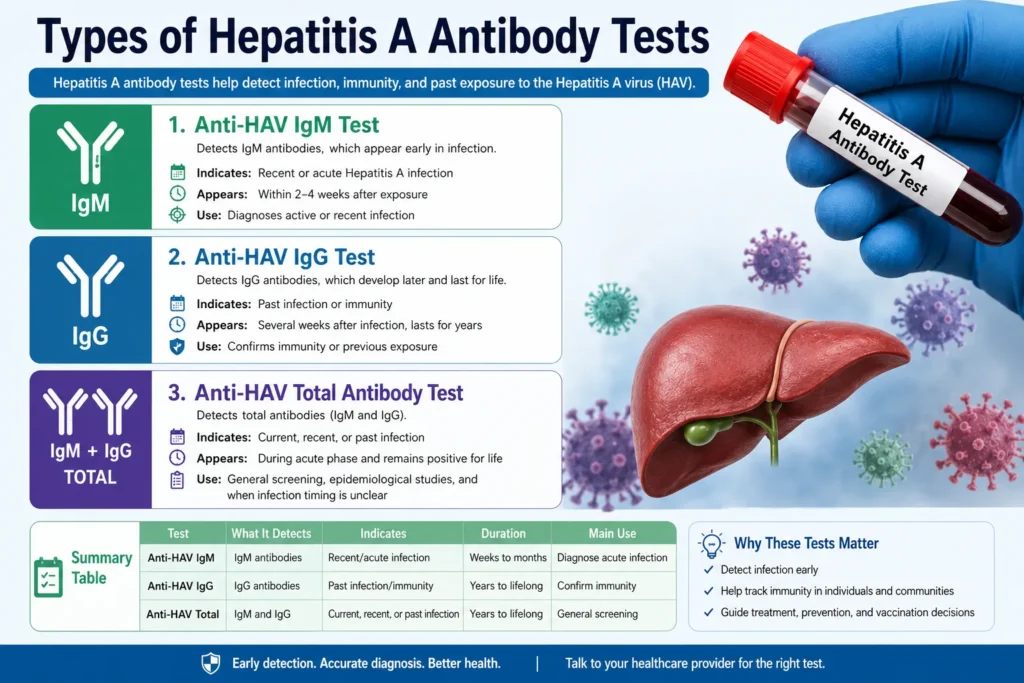
Doctors may order different hepatitis A tests.
4.1 Total Antibody Test
This checks for:
- IgM antibodies
- IgG antibodies
4.2 IgM Antibody Test
Used to identify recent or active infection.
5. Difference Between IgM and Total Antibodies
IgM Antibodies
- Appear early during infection
- Suggest recent exposure
IgG Antibodies
- Appear later
- Usually indicates long-term immunity
6. Causes of a Reactive Result
A reactive test can happen due to:
6.1 Previous Infection
Many people recover fully and remain immune.
6.2 Vaccination
The hepatitis A vaccination leads to the production of antibodies in the body.
6.3 Recent Infection
If IgM is positive, active infection may exist.
7. Symptoms of Hepatitis A
Mild cases can turn into serious ones. Sometimes it starts small, then grows much worse.
Common Symptoms:
- Fatigue
- Fever
- Nausea
- Vomiting
- Abdominal pain
- Dark urine
- Yellow skin,
- Poor appetite.
8. Transmission of hepatitis A virus
Not only contaminated food, but also water can transmit the virus when it is contaminated with feces. Most cases start when people swallow something dirty without knowing.
Common Transmission Sources:
- Poor sanitation
- Contaminated drinking water
- Infected food handlers
- Close personal contact
9. Risk Factors
Higher-risk groups-factors include:
- International travelers
- People in crowded living conditions
- Individuals with poor sanitation access
- Healthcare workers
- Food industry workers
10. Diagnosis and Laboratory Testing
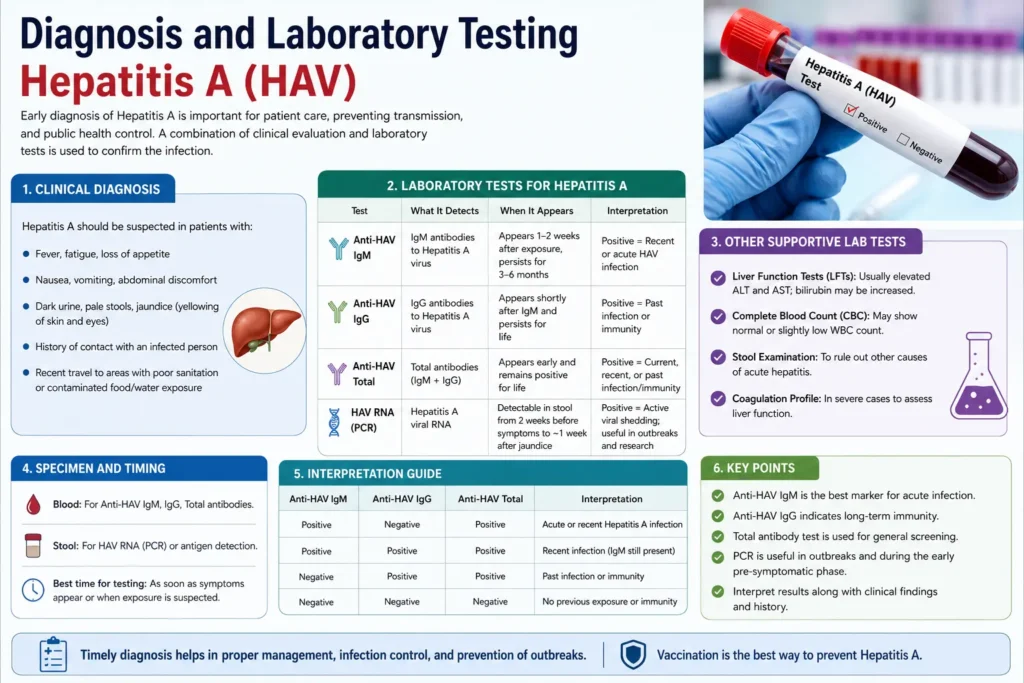
Doctors may use:
- Liver function tests
- Hepatitis antibody tests
- Physical examination
- Medical history
Important Liver Markers:
- ALT
- AST
- Bilirubin
11. Cubrimientos de Tratamiento
Hepatitis A has no specific treatment.
Therapy is focused on:
- Rest
- Hydration
- Nutrition
- Avoiding alcohol
Most patients recover completely
12. Recuperation and Immunity
The majority of people are immune for life following recovery or vaccination.
Recovery can take:
- Several weeks
- Sometimes months for full energy return
13. Prevention with Vaccination
Vaccination is the best protection from disease.
Prevention Advice:
- Wash your hands regularly
- Drink safe water
- Practice food hygiene
- Get vaccinated before travel
The Hepatitis A Vaccine provides strong protection
14. Hepatitis A-Related Complications and Disorders
Some folks bounce back completely, yet issues might still pop up.
Possible Complications:
- Scared liver inflammation
- Extreme dehydration
- Uncommon liver failure
Older years bring a higher chance of health troubles. As time passes, the system weakens slowly. Later on, issues show up more often than before. When youth fades, recovery takes longer and feels tougher. Risks rise simply because years add up.
15. Hepatitis A vs Other Hepatitis Viruses
| Type | Chronic? | Vaccine Available? |
| Hepatitis A | Usually No | Yes |
| Hepatitis B | Yes Possible | Yes |
| Hepatitis C | Often Chronic | No |
16. When to See a Doctor
Seek medical advice if you experience:
- Jaundice
- Severe vomiting
- Persistent fatigue
- Dark urine
- Severe abdominal pain
17. Living with Liver Disease
Supporting liver health is essential.
Helpful Habits:
- Balanced diet
- Avoid alcohol
- Regular medical checkups
- Maintain hydration
18. Myths People Believe About Hepatitis A
Reactive Does Not Mean Severe Disease
Gesetzes – ja, das hat in der Regel einen Schutz davor zur Folge.
Hepatitis A Does Not Become Chronic
The infections usually aren’t long-lasting. A lasting one? That hardly ever happens.
Vaccines Are Not Unnecessary
True – shots cut down chances a lot.
Internal Linking
- Liver disease guides
- Hepatitis B articles
- Vaccination awareness content
- Food safety articles
External Resources
Conclusion
Most times, a reactive Hepatitis A Ab Total test means you are shielded from the virus and are not currently sick. Knowing how antibody tests differ from those spotting active infections clears up worry that isn’t needed.
Most cases of hepatitis A can be avoided when people get checked by a doctor, receive shots, practice clean habits, and stay informed. Still, handling it well often depends on how early steps are taken.
FAQs
Q1. Hepatitis A Ab Total Reactive Meaning?
Antibodies for hepatitis A showed up in the test results.
Q2. Reactive Result Meaning Hepatitis A?
Sometimes no. Could point to earlier illness or a shot given before.
Q3. Is Hepatitis A Dangerous?
Some folks bounce back just fine – yet issues might pop up now and then.
Q4. Can Hepatitis A Be Cured?
Healing happens on its own in many situations when basic support is given.
Q5. Can Hepatitis A Be Prevented Through Good Hygiene And Vaccination?
Staying clear of illness starts with shots. Clean hands make a difference, too. Eating food that is handled right keeps trouble away.