

A cup of unsweetened tea can fit into a heart-conscious routine, but it is not a treatment or a guarantee against disease. People often want simple ways to support their heart as they age. Adults may drink tea for years, yet research does not prove that tea prevents heart disease.
Unsweetened black or green tea can be a reasonable drink choice. Studies link regular tea drinking with lower heart risks, but they do not show that tea caused those results. Added sweeteners and your response to caffeine also matter.
Tea can be part of your daily choices, not a stand-in for care or proven ways to protect your heart. The strength and limits of the evidence matter as much as the possible benefits. First, consider what research can say before looking at how tea might affect cardiovascular measures.
Key Takeaways
- Unsweetened black or green tea can fit a heart-conscious routine.
- Research links tea with lower heart risks, but does not prove prevention.
- Tea is not a treatment for heart disease.
- Sweeteners can change the drink’s sugar content.
- Caffeine may affect people in different ways.
Will tea be beneficial for heart health or not?
The short answer is that tea may be associated with better heart outcomes, but research has not shown that tea itself prevents them. Some studies link regular tea drinking with lower cardiovascular risk, but they cannot prove cause and effect.
A long-term study followed more than 100,000 Chinese adults for an average of seven years. Compared with people who drank tea fewer than three times a week, frequent tea drinkers had a 20% lower risk of a heart attack or related problem.
They also had a 22% lower risk of dying from heart disease. Those figures show differences between groups, not proof that tea caused the lower risks. Other habits or health factors may help explain the results.
A study can find that tea drinking and heart health occur together without showing that one caused the other. So the findings do not mean tea will prevent a heart attack or death for you. The overall association raises a further question: what might tea do to cardiovascular measures?
What heart-related effects might tea compounds have?
Tea’s plant compounds are one possible reason researchers have studied its relationship with cardiovascular measures. Flavonoids are plant compounds that can dampen inflammation and are found in black and green tea.
Tea also contains polyphenols, another group of plant compounds. Researchers have linked both groups with changes in blood vessels and inflammation. These findings suggest possible pathways, not a proven way to prevent heart disease.
Cholesterol and blood vessel function
A 2018 study found that tea appeared to slow the natural age-related decrease in HDL cholesterol. HDL is often called heart-helping cholesterol. The result does not mean tea can treat cholesterol levels.
Earlier research suggests tea may reduce LDL cholesterol, which is harmful cholesterol. Tea drinking has also been linked with better blood vessel function. These are reported links, not proof that tea prevents a heart attack or other disease.
| Measure | Reported tea association | What the finding means |
|---|---|---|
| HDL cholesterol | May slow age-related decline | Not proof of treatment or prevention |
| LDL cholesterol | May reduce LDL levels | Association does not prove prevention |
| Blood pressure and blood vessels | Linked with lower pressure and better function | Not proof of fewer heart events |
Blood pressure and inflammation
Tea polyphenols have been linked with lower blood pressure and dampened inflammation. Inflammation is the body’s response to injury or infection. Ongoing inflammation can play a role in many health problems, but tea’s effect on it is not a treatment.
Researchers have not shown that these changes will lead to a longer or healthier life for each tea drinker. The possible effects also do not establish which variety is the best fit for you. That calls for a closer look at common tea types.
Which type of tea should you choose?
Black and green tea are the most common choices in the United States, but neither is proven to prevent heart disease. Both contain caffeine and polyphenol antioxidants, so there is no proven best type for heart health.
Black and green tea make up 99% of tea consumed in the United States. Black tea contains more caffeine, while green tea has a slightly better antioxidant profile. Those differences do not prove that one gives you better health benefits.
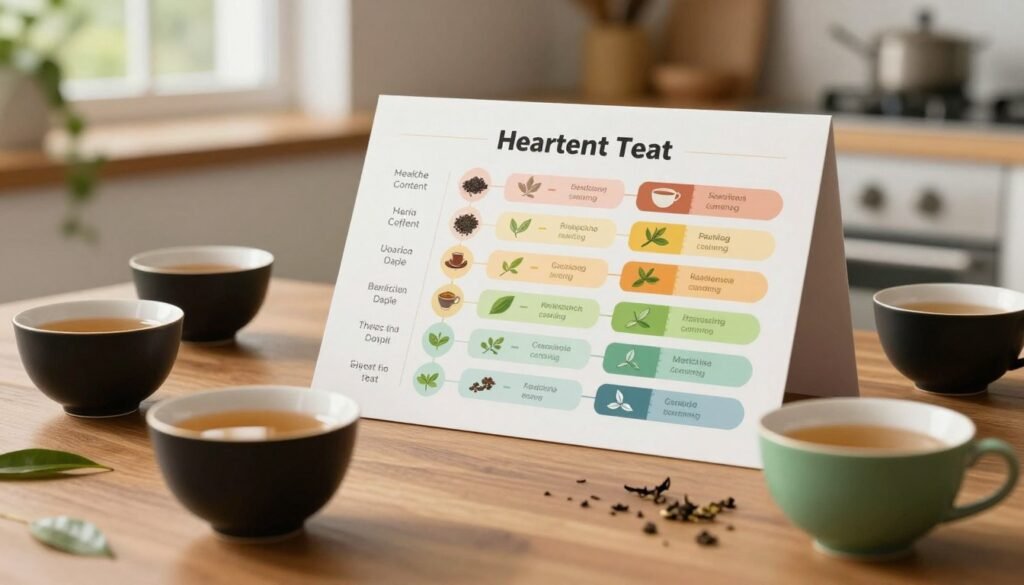
Green tea and black tea for heart health
Green tea contains polyphenols and may appeal to you if you want a tea with a slightly better antioxidant profile. Yet research does not establish it as a guaranteed superior choice. Your taste and response to caffeine can guide your pick.
Black tea has more caffeine, which may matter if caffeine makes you feel restless or affects your sleep. Both types can be enjoyed without added sweeteners. A single type tea cannot replace care that lowers heart disease risk.
Herbal teas, peppermint, and heart-and-lung claims
Peppermint tea may be soothing, but there is not enough information here to call it the best tea for heart health. The same is true for claims about the best tea for both heart and lungs. No lung-health benefit is established by these findings.
Rooibos is a separate herbal infusion, not black or green tea. You can read about rooibos tea and its possible health effects, including possible heart-related effects that are not established treatments. Once you choose a type, consider how confidently you can read reported risk reductions.
How strong is the evidence that tea lowers cardiovascular risk?
A review of 20 studies found a lower observed risk of cardiovascular death among long-term tea drinkers, but that result does not prove tea was the cause. The review linked up to two cups a day for more than seven years with a 19% lower risk of death from a heart attack or stroke.
Each additional daily cup was linked with a 4% lower risk. These numbers describe group associations, not a personal promise. They do not show that tea will lower your own risk of heart disease.
What long-term studies observed
The review included two long-term studies, one in the United States and one in China. Their average follow-up times differed, as did how often people drank tea. The table shows how those study groups were compared.
| Study group | Average follow-up | Tea-drinking comparison |
|---|---|---|
| Chinese cohort in the first study, over 100,000 adults | 7 years | More than three times weekly versus fewer than three |
| United States cohort in the review | 7.3 years | Up to two cups daily for over seven years versus less or none |
| Chinese cohort in the review | 18.5 years | Up to two cups daily for over seven years versus less or none |
The review’s 19% and 4% figures reflect reported associations with cardiovascular death. They do not predict what will happen to any one person. A group result cannot promise that drinking more tea will help you.
Why the results do not prove cause and effect
These studies observed people’s habits rather than assigning tea as a treatment. Tea drinkers may differ from people who drink little or none. Other lifestyle or health differences could affect the results.
The studies also used different tea-drinking frequency groups. They did not identify tea type or whether people added milk or sugar. Those gaps make it hard to tell which drinks or habits shaped the results.
Findings about death risk do not prove that tea directly prevents heart attacks or strokes. The numbers are useful, but they are not a dose to follow. Practical choices can help you enjoy tea without adding avoidable concerns.
How can you make tea a heart-smart drink?
A plain cup of tea and a heavily sweetened tea drink can be very different choices for your daily routine. Unsweetened tea is the simplest choice if you want to avoid extra sugar.
Sugar or honey can turn a low-calorie drink into a high-sugar beverage. Sweet tea has also been linked with adverse cardiac outcomes. That link does not prove sweet tea caused those outcomes, but it gives you a reason to watch added sugar.

Keep added sugar in check
If you like a sweet taste, measure the sugar or honey instead of pouring it freely. Both add sugar, even when honey sounds like a more natural choice. You can also try reducing the amount over time.
If you add milk and drink several cups tea each day, consider low-fat milk. It can help keep added fat lower than whole milk. Milk does not make a sweet tea drink low in sugar.
Let very hot tea cool before drinking
Tea served at 140°F or higher has been associated with higher esophageal or gastric cancer risk. This is a separate safety concern, not a heart-health effect. Let the cup cool before you drink it.
Use this short checklist when you make tea at home or order it:
- Choose unsweetened tea.
- Measure any sugar or honey you add.
- Consider low-fat milk if you use milk often.
- Let very hot tea cool before drinking.
These steps do not set a proven dose for heart benefits. They help you make a drink that fits your routine without extra sugar or excessive heat. Your symptoms, caffeine response, and medical needs may call for more personal guidance.
Can you drink tea with a heart condition or palpitations?
If you have palpitations or a diagnosed heart condition, whether tea suits you depends on your symptoms, caffeine sensitivity, and care plan. Caffeine can cause anxiety, restlessness, or trouble sleeping, and people respond to it differently.
If caffeine brings on unwanted effects, you may need to cut back or choose a lower-caffeine drink. Palpitations can have different causes, so do not assume tea explains them. Get personal advice if symptoms concern you.
Caffeine, palpitations, and tea choices
For “what tea is good for heart palpitations,” there is no single answer that fits everyone. Your caffeine sensitivity and symptoms matter. Ask your care team what amount, if any, fits your condition.
For “which tea is good for heart patients,” an unsweetened or lightly sweetened drink differs from heavily sweetened milk tea. The added sugar can change the drink, while your condition and care plan shape what suits you. Do not treat tea as a way to manage symptoms.
Heart conditions, iron absorption, and medical advice
If you have heart failure, ask your clinician about tea and your own fluid or caffeine advice. The same goes for questions about milk tea or a heart medicine. Do not assume that every tea is safe with every medicine.
Tannins in tea can bind to iron and reduce its absorption in your digestive tract. If iron levels are a concern, ask whether tea timing matters for you. A clinician or pharmacist can help you review your personal needs.
Consider raising these questions with your clinician or pharmacist:
- Is caffeine suitable for your condition?
- Do your medicines affect your tea choices?
- Does tea timing matter for your iron intake?
For general health information and its limits, read the health information disclaimer. Get individualized clinical advice before making a major change to your usual drinks.
Conclusion
Unsweetened tea can be one part of a heart-conscious routine, but it is not a substitute for medical care. Black and green tea offer polyphenols, and studies have linked tea drinking with heart-related measures. Those links do not establish tea as a way to prevent or treat heart disease.
Your next step can be simple: choose a tea you enjoy without heavy sweetening. If you have a heart condition or questions about caffeine or medicine, ask your clinician what fits your care plan.
FAQ
What is the healthiest tea for the heart?
No tea is proven to be the healthiest for your heart. Unsweetened black and green tea both provide polyphenols, and studies have linked them with heart-related measures. Green tea has a slightly better antioxidant profile, while black tea has more caffeine. Your taste and caffeine response can guide your choice, but neither type is a proven way to prevent heart disease.
What is the best drink for your heart and arteries?
Water is a strong everyday choice for your heart and arteries. Unsweetened tea or coffee can also fit, if you tolerate caffeine. Sugary drinks add sugar without offering the same simple hydration. No single drink can prevent heart disease on its own, so think about your whole diet and follow your care team’s advice.
What tea is good for arteries?
Black and green tea contain polyphenols and have been linked with blood vessel effects. Researchers have also studied tea’s links with blood pressure and cholesterol. These findings do not prove that tea prevents artery disease or clears blocked arteries. You can drink unsweetened tea as a beverage, but do not use it instead of care for a heart or blood vessel condition.
Can I drink tea if I have heart problems?
Often, you can drink tea with heart problems, but your condition, symptoms, caffeine sensitivity, and care plan matter. Caffeine may cause restlessness or other unwanted effects for some people. If you have heart failure, ask your clinician about your fluid and caffeine advice. Ask your care team or pharmacist if you are unsure how tea fits with your medicines.
What is better for the heart, tea or coffee?
There is no clear winner between tea and coffee based on these findings. Both can be enjoyed without added sweeteners, but both may contain caffeine. Your response to caffeine can help guide your choice, especially if it affects your sleep or makes you feel restless. Pick a drink you enjoy, and do not count on either one to prevent heart disease.
What is the unhealthiest tea to drink?
Heavily sweetened tea can be a less healthy choice because it may add substantial sugar. Plain brewed tea is different from a sweet tea drink or a milk tea with added sugar. Honey also adds sugar. If you like a sweet taste, measure what you add or use less over time.
What is the safest tea to drink every day?
Unsweetened tea in a type and amount you tolerate is a reasonable daily choice. There is no single amount that suits everyone, since caffeine sensitivity and health needs differ. Tea may cause restlessness or trouble sleeping in some people. If you have a heart condition or take medicine, ask your clinician about your personal concerns.
Which organ is affected by tea?
Tea can affect more than one body system, rather than just one organ. Caffeine may cause anxiety or restlessness, and tannins can reduce iron absorption in your digestive tract. Very hot tea has also been linked with risks to the esophagus or stomach. Your response depends on the drink and your own health.