
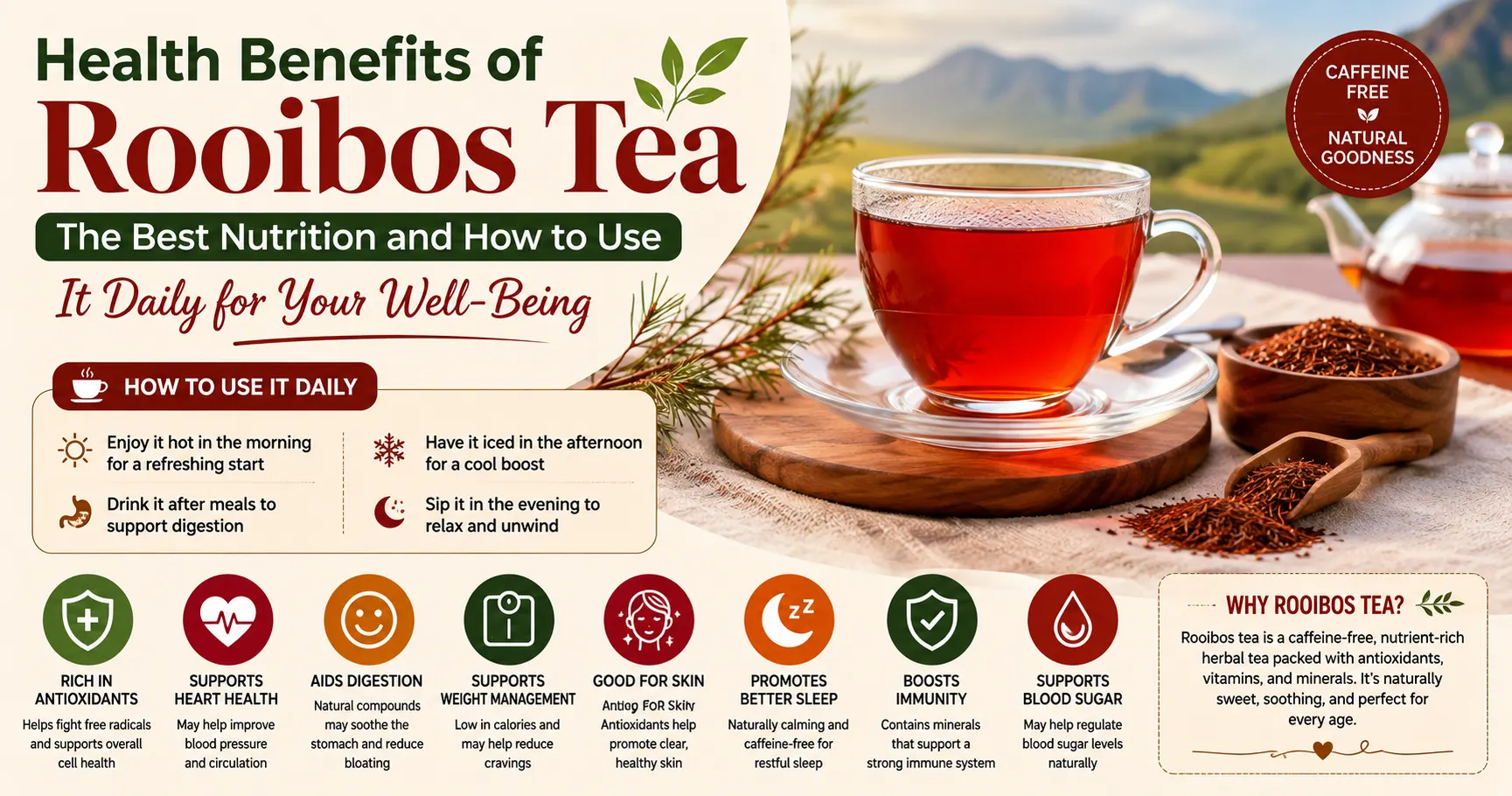
Rooibos Tea Health Benefits
Rooibos is a naturally caffeine-free herbal tea made from a South African plant. It contains polyphenols, which are being studied for their biological effects. However, human research is limited, and proposed benefits for heart health, blood pressure, blood sugar, weight, sleep, digestion, and immunity have not been established as treatments or proven ways to prevent disease.
Warmth spreads through a cup of rooibos when daylight fades, giving calm without sharp edges. Its taste holds depth even though no caffeine moves beneath the surface. Mornings weighed down by habit find relief in its steady presence. A slow evening unwinds more easily with this drink near at hand. Rest comes softer when flavors stay mild, and the body feels supported.
Start here if you’re curious how rooibos tea might fit into your routine. Picture sipping a warm cup while picking up facts on what it gives your body. Not every plant does much – this one might surprise you, though. Some studies point toward quiet perks hiding in its red leaves. You can steep it loose or bagged, hot or cool, morning or late night. Watch how long it sits in water; timing changes the taste.
A few people feel odd after drinking it – stomach shifts or skin quirks show up once in a while. What’s inside? Minerals pop up, along with antioxidants that move slowly through your system. Think of adding it to smoothies, not just mugs. Pouring knowledge into each paragraph, we lay out lab results next to real-life habits. Never claimed magic, never selling anything – just notes from tests and days spent trying it out.
Rooibos Tea Health Effects Explained Simply
From South Africa comes a reddish brew gaining fans everywhere. Sweet on the tongue without any added sugar, it skips caffeine entirely – making evenings calmer. This leafy drink packs compounds that fight daily damage inside the body. Young or old, many find comfort in its warm color and gentle taste. Not every plant infusion lasts decades in popularity – but this one keeps rising.
Maybe you want a better option than regular tea. Perhaps your stomach feels off sometimes. Or maybe nights are hard to wind down from. Rooibos could fit right into those moments instead.
Begin here if you want to know how rooibos behaves in the body. A look at its natural makeup shows what it gives when sipped each day. Some findings point to possible perks – others hint at limits. Steeping matters: time and heat shift the outcome. Real habits shape how people add it into routines. Science has tested some claims, though answers stay partial.
What makes rooibos tea?
A flash of red appears across sunlit plains, where a hardy plant defines what rooibos becomes – its color giving name, pulled from old Afrikaans speech.
Not imported leaves from far-off places, this infusion is made entirely from Aspalathus linearis. It is a South African native plant that clings predominantly to the terrain, and what grows there is what goes into your cup.
Fresh off another kind of shrub, rooibos leaves out the stimulant common in most brews. While green and black types stem from Camellia sinensis, this one grows on its own path. Tannin levels stay mild here, nothing sharp or heavy. Its roots lie elsewhere, far from the standard tea fields.
Some folks like rooibos tea since it tastes mellow, smells rich and woody, yet carries natural substances that may help well-being.
One type shows up first. Another kind follows close behind
- Red rooibos
- Green rooibos
One kind has antioxidants along with helpful plant substances, just like the other does.
History and origin of rooibos tea
Long before modern times, rooibos grew wild in South Africa’s Cederberg mountains. People native to that area picked the plant, then processed its leaves through natural fermentation – using it both as medicine and part of everyday life.
Farming of rooibos took off in the 1900s, then made its way into markets throughout Europe, later reaching parts of Asia and North America. It was initially local, but expanded internationally after decades of accumulated demand. “
Today, there is a consensus that rooibos tea is a healthful herbal drink worldwide.
External Resource:
Nutrition facts of Rooibos tea facts
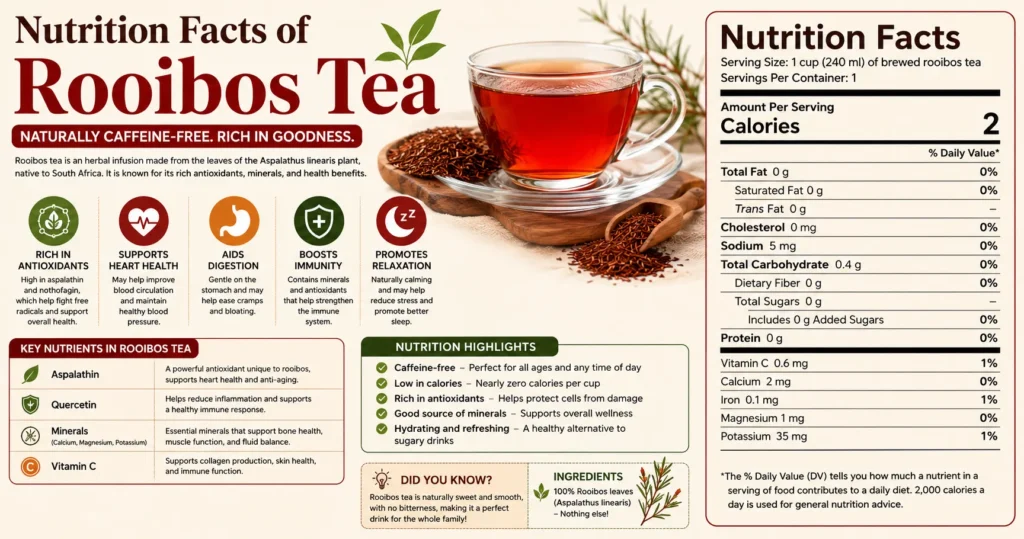
Rooibos tea has an amount of a few good nutrients and plant compounds, such as:
- Polyphenols
- Flavonoids
- Aspalathin
- Quercetin
- Minerals
- Calcium
- Potassium
- Magnesium
- Zinc
- Alpha hydroxy acid
One of the great advantages of consuming rooibos tea is that it is:
- Caffeine-free
- Very low tannins
- No added sugar
- Very few calories
It accommodates many dietary preferences.
Rooibos Tea Varieties
Red Rooibos Tea
Fermented leaves turn red rooibos brownish-red, bringing out a naturally sweet flavor instead of sharpness. Yet the process softens its edge far beyond what fresh plants offer.
Green Rooibos Tea
Fresh green rooibos skips fermentation entirely. The antioxidants remain just as active in this process, but the taste effect is softened on the tongue.
Flavored Rooibos Tea
Producers typically mix rooibos with:
- Vanilla
- Cinnamon
- Citrus
- Honey
- Chai spices
Advantages of drinking rooibos tea
1. Antioxidants Abound in Rooibos Tea
The antioxidants in rooibos tea are active against the damage caused by oxidation. Inside your system, these compounds step in where stress builds up.
Oxidative stress contributes to:
- Aging
- Inflammation
- Chronic diseases
- Cellular damage
These are the most potent antioxidants present in rooibos:
- Aspalathin
- Nothofagin
- Quercetin
The fight against cell harm could come from these substances. Free radicals might stand less of a chance when they show up.
External Resource:
National Center for Biotechnology Information
2. Naturally Caffeine-Free
Rooibos tea skips the caffeine; coffee and black tea do not. Instead, it offers a calm alternative without that jittery lift.
This works well for:
- Expectant mothers Children
- People who have sensitivities to caffeine
- Evening consumption
Some choose rooibos at night since it helps calm the mind while staying gentle on rest patterns.
3. Supports Heart Health
A few reports have indicated that rooibos tea has a positive effect on the cardiovascular system.
Possible benefits are:
- Enhanced circulation of the blood
- Decreased swelling and inflammation
- Better cholesterol balance
- Lower oxidative stress
One study found that rooibos might lower LDL, the kind labeled bad, yet at the same time lift levels of the good type known as HDL.
4. May Help Lower Blood Pressure
Some find sipping rooibos eases tension in arteries, possibly thanks to compounds fighting oxidative stress.
Normal blood pressure also means less chance of having:
- Stroke
- Heart attack
- A disease affecting the kidney
While rooibos is no replacement for medicine, it may have a place in maintaining heart health
5. Supports Healthy Digestion
From time to time, people have turned to rooibos tea when their stomach feels off. It just sort of settled things without making a fuss.
It may help reduce:
- Stomach cramps
- Bloating
- Nausea
- Indigestion
Something in the tea could calm irritation inside your gut.
6. May Help With Weight Control
Some folks sip rooibos plain since a gentle sweetness shows up naturally in each cup. Swap out soft drinks once in a while, given how little energy value hides in this herb’s glow.
It may help support weight goals by:
- Decreasing energy consumption
- Encouraging fluid intake
- Supporting metabolism
- Lowering stress-related eating
Fat cells might respond differently when exposed to rooibos, one study hints. Hormone signals tied to hunger could shift, research notes. Not every trial agrees on how strong this effect really is.
7. Promotes Better Sleep
Some choose rooibos at night since it has no caffeine. People often sip it after dark because the drink lacks any stimulant. Nighttime brings a quiet moment where this herbal option fits well without disrupting sleep. Without caffeine inside, it slides into evening routines easily. That reach out for it. It doesn’t stimulate thinking, so when day turns to night and dark eyes start rolling, there are hands.
Warm rooibos tea may:
- Encourage relaxation
- Reduce stress
- Support restful sleep
A warm cup of herbal tea at night might just slip into your evening rhythm. The way it calms the mind is unexpected to some. This small habit – sipping slowly in dim light – often eases the shift toward sleep. The quiet moment matters more than the drink itself. Routine builds without effort when comfort leads the way.
8. Supports Skin Health
Antioxidants show up in rooibos tea along with a touch of alpha hydroxy acid – both tied to keeping skin in good shape. What stands out is how these pieces fit into everyday sips without fuss or fanfare.
Potential skin-related benefits include:
- Reduced inflammation
- Improved hydration
- Slower visible aging
- Protection from oxidative stress
Rooibos extract is available in certain cosmetic items.
9. May Support Blood Sugar Balance
Aspalathin could contribute to blood sugar control, according to animal studies. Sometimes results point toward steady glucose control. Research in test settings supports this idea, too. Not every detail is clear yet, though.
Maybe rooibos helps those who watch their blood sugar stay on track. One reason might be how it works inside the body over time.
Still, fresh research on people has to happen next.
10. Supports Immune Function
From time to time, antioxidants in rooibos tea hide alongside beneficial minerals in fighting oxidative stress. Due to this pairing, immunology remains fluid, even under pressure.
A strong immune system is necessary to:
- Combat diseases
- Supporting recovery,
- maintaining overall wellness
Rooibos Tea Is Full of Natural Antioxidants
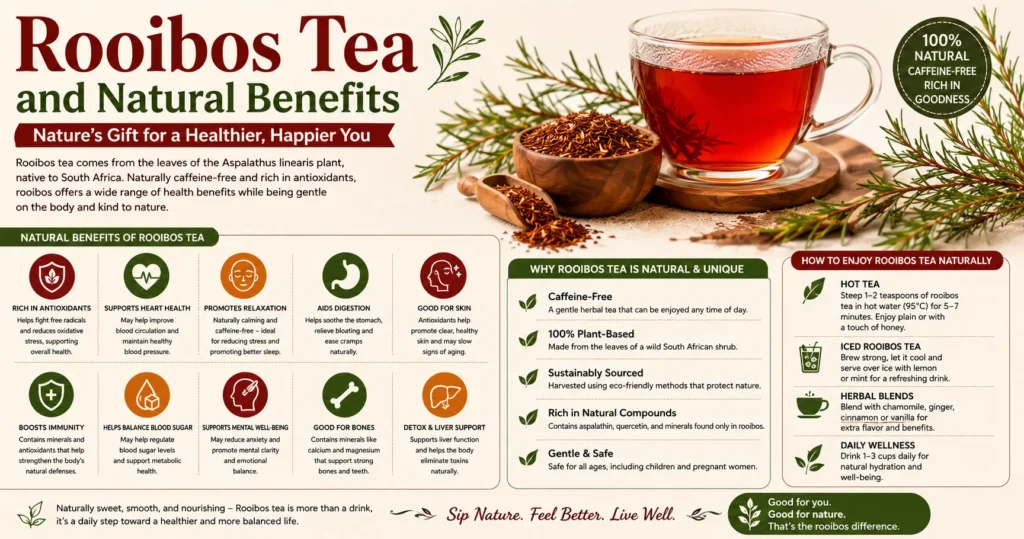
The destructive power is offset by the antioxidants, and these also neutralize the aggressive free radicals.
Free radicals are associated with:
- Early aging
- Ongoing inflammation
- Cell damage
Antioxidants, unlike most drinks, have? Rooibos carries those. Few liquids hold them. Antioxidants sit more heavily in green rooibos when compared to its red cousin. A different processing path likely plays a role behind the scenes. Less oxidation helps lock those compounds in place early on.
Rooibos tea promotes a healthy heart and circulation
Still, many people die of heart failure worldwide.
Consuming healthy fluids is part of a healthy heart. What you sip daily matters more than most think. There are choices to be made when it comes to vessels and beats. Liquid habits shape how well blood moves. Small shifts in what fills your glass add up over time.
Rooibos tea may contribute by:
- Reducing oxidative damage to lipids or proteins.
- Promoting healthy vasculature
- Improving cholesterol parameters
- Promoting hydration
External Resource:
Rooibos Tea and Weight Management
Swapping soda for rooibos tea could trim calories each day. Instead of sweet drinks, this herbal option slips into your routine quietly. One change, less sugar – quietly cutting back without force. Rooibos steps in where cola used to sit. A different rhythm begins, drop by drop. Calories dip when sweetness fades out. Not loud, just steady.
Weight management benefits include:
- Zero caffeine crashes
- Better hydration
- Reduced sugar consumption
- Appetite support
For best results:
- Drink rooibos without added sugar
- Take with food, if needed, in a meal consisting of several types of food.
- Continue to be physically active
Rooibos Tea Relieves Stomach Problems
Among many drinkers after eating, rooibos tea is a favorite drink.
So much easier on the gut, it can ease discomfort while helping food move smoothly through.
Traditional uses include relief from:
- Gas
- Cramping
- Mild digestive discomfort
Rooibos Tea and Diabetes Mellitus
Information on the impact of rooibos tea consumption on blood glucose levels is still in its infancy, as studies are being conducted.
Such substances may enhance the body’s response to insulin and may also decrease the injury related to high blood sugar. Though not all work the same, a few show signs of fighting cell stress seen in diabetic conditions.
Still, rooibos tea works best alongside medical care rather than taking its place.
External Resource:
Centers for Disease Control and Prevention
The skin benefits of rooibos tea and more
Moisturizer and antioxidants will play a large role in your skin’s health.
Can Rooibos Tea Help with?
- Redeem skin elasticity
- Decreased Redness
- Anti-aging benefits
- Defense against environmental stressors
A lot of people apply cooled rooibos tea to their faces, too.
Rooibos Tea Linked to Better Sleep
Waking up tired might drag down your day. Health takes a hit when rest slips away. Mood shifts sour without proper shut-eye. Productivity drops when nights stay broken.
Built for quiet moments, rooibos steps in where coffee fades out – no caffeine rush, just ease. Nighttime sipping finds balance here, swapping jittery highs for slow warmth. Energy drinks lose their edge when faced with this herbal stillness. A different rhythm emerges, one cup at a time.
To improve bedtime relaxation:
- Brew warm rooibos tea
- Avoid excess sugar
- Thirty to sixty minutes before sleeping, have a drink
Rooibos Tea While Pregnant
Babies on the way usually mean fewer coffee breaks. A mother’s daily habits tend to shift when expecting.
Most doctors see rooibos tea as safe to drink now and then, since it contains no caffeine at all.
Possible benefits include:
- Hydration
- Relaxation
- Digestive comfort
Consult a physician while pregnant. Advice early on makes for a smoother ride. A trained medical person knows what steps make sense. Never skip checking in when expecting a baby.
Rooibos tea for kids
Little ones might drink rooibos without worry – there’s zero caffeine inside. It just sits gently in tiny tummies, no jitters tagged along. In South Africa, kids often sip rooibos tea like a gentle soda. Too much sugar, though? That turns it sour fast.
Rooibos Tea and Green Tea Comparison
| Feature | Rooibos Tea | Green Tea |
| Caffeine | No | Yes |
| Taste | Sweet and earthy | Grassy |
| Tannins | Low | Moderate |
| Antioxidants | High | High |
| Sleep Friendly | Yes | Less suitable |
Both teas provide health benefits.
Rooibos Tea vs Black Tea
| Feature | Rooibos Tea | Black Tea |
| Caffeine | None | High |
| Acidity | Low | Higher |
| Taste | Smooth | Bold |
| Best Time | Evening | Morning |
Preparing rooibos tea
Review this product at Ingredients
- A teaspoon of rooibos leaves
- Cup of hot water
Instructions
- Boil water
- Add rooibos tea
- Steep for 5–7 minutes
- Strain and serve
Optional additions:
- Honey
- Lemon
- Cinnamon
- Milk
When should you drink Rooibos tea?
You may have your rooibos tea whenever you want.
Popular times include:
- Morning
- After meals
- Before bedtime
Without caffeine inside, sleep tends to stay unaffected most nights.
Possible Side Effects of Rooibos Tea
Most folks find rooibos tea easy on their bodies. It tends to sit well without causing trouble.
Then again, too much of a good thing can sometimes result in:
- Allergic response
- Liver concerns in rare cases
- Hormonal interactions
Enjoy drinks carefully. Talk to your doctor before drinking, especially when health issues exist.
Scientific Studies on Rooibos Tea
Researchers continue studying rooibos tea’s potential effects on:
- Inflammation
- Diabetes
- Heart disease
- Oxidative stress
- Cancer prevention
Even so, early signs seem positive – yet testing with actual patients remains necessary
External Resource:
How to Buy Quality Rooibos Tea
Buy rooibos tea with the following in mind:
- Organic Certification
- Fresh aroma
- Loose-leaf quality
- Reputable brands
- Minimal additives.
Avoid items that are packed with artificial flavors and sugar.
Recettes de Rooibos Tea
Latte au rooibos
Ingredients:
- Rooibos tea
- Warm milk
- Cinnamon
- Honey
What a fantastic way to beat the heat — iced rooibos tea.
Ingredients:
- Brewed Rooibos tea.
- Ice cubes
- Lemon slices
- Mint
Rooibos Smoothie
Mix:
- Chilled Rooibos tea
- Banana
- Almond milk
- Honey
Final Thoughts
And if your everyday beverage had additional benefits? Rooibos brings antioxidants without caffeine, quietly supporting well-being. This reddish brew isn’t shouting for attention – just fits right into a balanced routine. Some sip it for calm, others for taste; either way, it shows up gently. It’s maybe worth giving it a go – not because the masses so say, but because mornings feel different with it.
Besides helping your heart, rooibos tea can ease digestion – also bringing better rest along with steady fluid balance for plenty who drink it. While some notice calmer nerves, others find their energy levels even out, all without caffeine’s push. Though not a magic fix, its gentle touch suits daily routines where wellness quietly matters.
Even with studies still underway, today’s findings show rooibos tea might fit well into daily healthy habits. While science digs deeper, what we know now points to it being a sensible choice alongside regular meals. Because data keeps growing, yet nothing contradicts its role in nutrition so far. Since experts haven’t raised red flags, including this drink feels reasonable for everyday life. Though answers aren’t complete, present clues support sipping it without concern.
For best results:
- Opt for good-quality rooibos tea
- Avoid too much sugar
- Have a steady moderate intake of it
- Use in conjunction with healthy lifestyle practices
Hot or cold, rooibos ranks as one of the herbal teas in terms of taste and how well it adapts to different routines. There are not many drinks that are as effective as this one in all seasons, without ever standing out too much.
FAQ’s
Q1. How does the health of rooibos tea compare to green tea?
“They’re both good teas, there’s no question that they’re both good-for-you teas.”Rooibos tea is naturally caffeine-free, but green tea does contain caffeine as well as a potent antioxidant called catechins.
Q2. Can I drink rooibos tea daily? Is it safe for daily use?
Yes –it is safe to drink rooibos tea daily for the majority of people.
Q3. Does drinking Rooibos tea help you drift off more quickly?
Without caffeine inside, this drink might let thoughts slow down while muscles unwind, leading to restful hours later. Quiet moments could follow when sipping it before bed.
Q4. Pregnancy and Rooibos Tea?
Some say it’s okay to have while expecting, yet always best to ask your doctor first. Your midwife may have different opinions.
Q5. Rooibos Tea And Weight Loss?
Beginning the day on the right foot with Rooibos tea and a dose of activity is thought to help with the loss of those unwanted pounds. While it is subtle in flavor, its effect is maximal when taken with daily exercise and a wholesome diet. This red brew shows up well alongside consistent effort, not as a fix but as part of the rhythm. Effort matters most – yet small choices like this one add up beneath the surface.
What Human Evidence Does—and Does Not—Show About Rooibos Tea
Rooibos is a naturally caffeine-free herbal infusion containing plant polyphenols, but the presence of antioxidants in a drink does not prove that drinking it prevents or treats disease. Laboratory findings and animal studies cannot establish that rooibos lowers blood pressure, treats diabetes, causes weight loss, improves immunity, prevents heart disease, treats digestive disorders, or improves skin health in people.
Human evidence is limited. Claims in this article about blood pressure, heart health, blood sugar, weight management, sleep, skin, digestion and immune function should be understood as research questions or traditional-use claims—not established clinical benefits. Rooibos should not replace prescribed medicines, a balanced diet, or evidence-based treatment for hypertension, diabetes, cardiovascular disease or other conditions.
Safety: Rooibos is commonly consumed as a beverage, but “natural” does not guarantee zero risk. Rare case reports have described liver injury after use of herbal tea preparations containing rooibos together with buchu; these reports do not prove that ordinary rooibos tea alone commonly causes liver injury. People with liver disease, those taking medicines, and anyone who develops jaundice, dark urine, severe nausea or unusual fatigue after using an herbal product should seek medical advice. Concentrated extracts and multi-herb blends should not be assumed to have the same safety profile as a normal cup of tea.
Pregnancy and children: Evidence on medicinal amounts, concentrated extracts and regular high intake during pregnancy, breastfeeding or childhood is limited. Do not present rooibos as a proven treatment or as automatically safe at every dose for these groups; ask a healthcare professional about regular medicinal use.
Sources: Case report: hepatotoxicity associated with a rooibos-and-buchu herbal tea; Clinical report on rare liver injury attributed to rooibos. Case reports identify possible safety signals; they cannot estimate how often an event occurs or prove causation for every rooibos product.
Evidence Review: What Rooibos Tea Can—and Cannot—Do
A 2024 systematic review identified only eight eligible human studies involving 175 adults and concluded that the evidence was insufficient to establish health benefits because the studies were few, small, varied in design and measured a narrow range of outcomes. A separate 2023 scoping review also found a limited human evidence base. Findings from cells or animals should not be presented as proven benefits in people.
Accordingly, claims that rooibos lowers blood pressure, improves cholesterol, controls blood sugar, promotes weight loss, improves sleep, treats digestive problems, boosts immunity or protects skin should be described as preliminary research questions—not established effects. Rooibos is a caffeine-free beverage option, but it is not a treatment for hypertension, diabetes, heart disease, insomnia or any other medical condition.
Safety: Ordinary beverage use and concentrated extracts or very high daily intake are not necessarily equivalent. Rare case reports have described liver injury associated with large or long-term rooibos intake. A clinical case report also described a possible reduction in tacrolimus levels with very high rooibos consumption; people taking tacrolimus or other medicines with narrow therapeutic ranges should discuss regular high intake with their transplant or prescribing team. These case reports are safety signals, not proof that normal occasional consumption commonly causes liver injury or drug interactions.
Pregnancy and children: Do not describe rooibos as proven safe for medicinal-dose use during pregnancy, breastfeeding or in children. Evidence for concentrated extracts and high intake in these groups is insufficient. Ask a healthcare professional before using medicinal amounts or extracts.
Sources: 2024 systematic review of rooibos consumption and human health outcomes; 2023 scoping review of rooibos in humans; Memorial Sloan Kettering: Rooibos Tea—evidence, safety and interactions; Clinical case report of rooibos-associated liver injury.
2 thoughts on “Health Benefits of Rooibos Tea: the Best Nutrition and How to Use It Daily for Your Well-Being”