
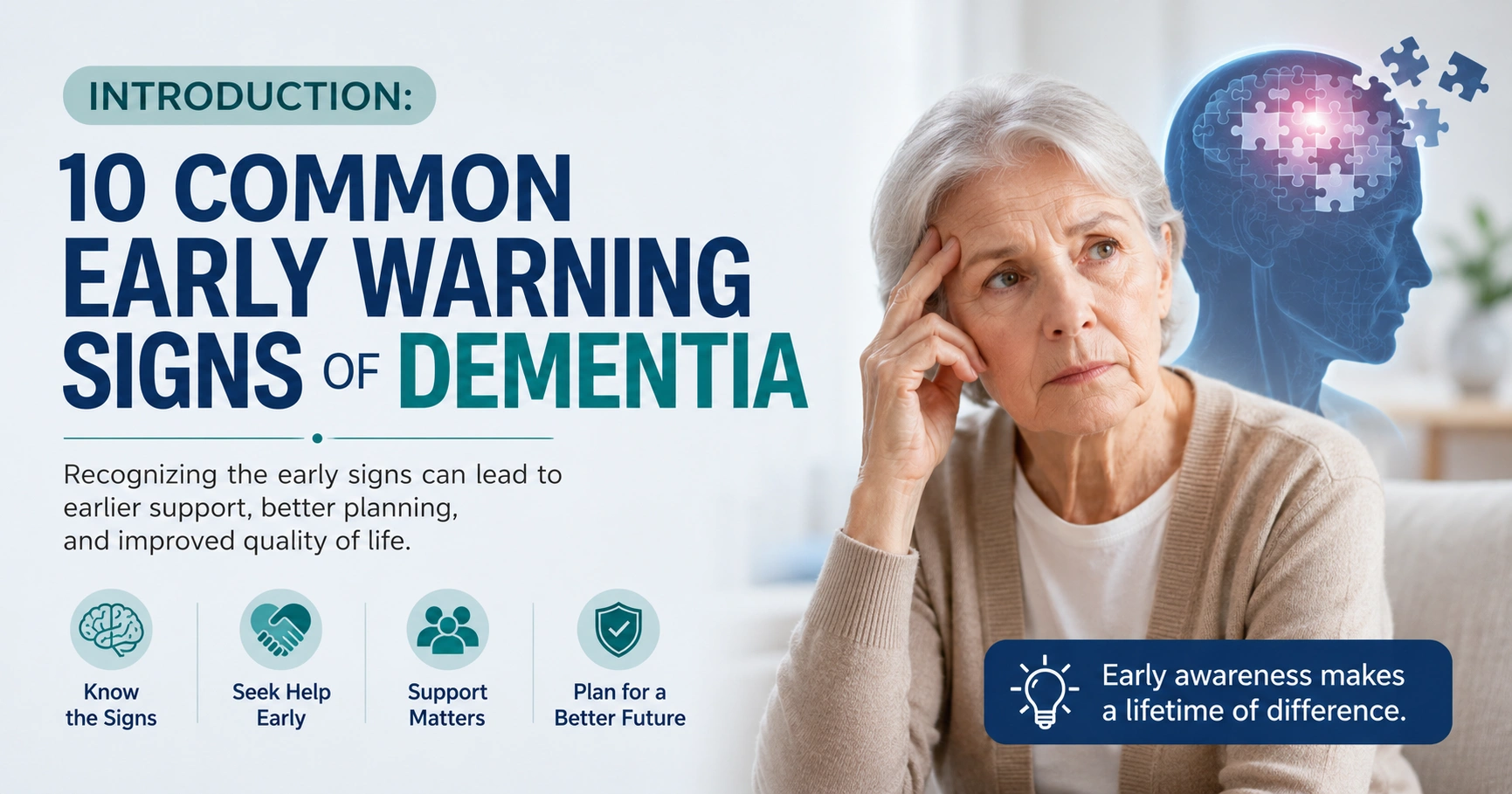
Introduction: 10 Common Early Warning Signs of Dementia
Dementia impacts countless people worldwide, and is a leading cause of loss of independence in elderly people. Of course, we all forget things from time to time as we age — but when memory loss, confusion or behavioral changes persist and begin to interfere with day-to-day living, it’s time to take note.
Spotting the early signs matters. The sooner you recognize them, the sooner you and your loved ones can talk to a doctor, figure out what’s going on, and make some decisions about care. It also gives you a better shot at treating reversible issues that sometimes look like dementia, like vitamin shortages, thyroid problems, or even side effects from certain medications.
Here, you’ll find a guide to the ten classic early signs of dementia—how they show up, what makes them different from basic aging, what raises the risk, and what you can do about it, from diagnosis to treatment and common questions people ask.
Just so you know: Dementia isn’t just one disease. It’s a broad term for serious declines in memory and thinking that mess with everyday life. Alzheimer’s is the most well-known cause, but there are other conditions that lead to dementia too.
What Is Dementia?
Dementia is a syndrome associated with memory deficits, impaired judgment and decreased orientation, reasoning and other domains of thought and behavior. It is not a part of normal aging but rather a disease which impacts the brain cells’ communication abilities.
There are several types of dementia including:
- Alzheimer’s disease (the most prevalent one)
- Vascular
- Lewy body
- Frontotemporal
- Mixed
While each form presents with distinctive features, some symptoms may overlap and be present in two or more types.
1. Memory Loss That Disrupts Daily Life

Memory loss is often the earliest and most recognizable symptom of dementia.
People may:
- Repeatedly ask the same questions
- Forget recently learned information
- Miss important appointments
- Rely increasingly on reminder notes or family members
Normal Aging vs Dementia
| Normal Aging | Possible Dementia |
| Occasionally forgetting names | Frequently forgetting recent conversations |
| Misplacing items occasionally | Putting objects in unusual places repeatedly |
| Remembering later | Unable to recall the information |
2. Challenges in Planning or Problem Solving
The routine jobs that once were easy are now harder to do.
Dias examples include: Following a familiar recipe
- Managing monthly bills
- Balancing a checkbook
- Tracking medications
- Organizing schedules
This change reflects declining executive function rather than simple distraction.
3. Confusion With Time or Place
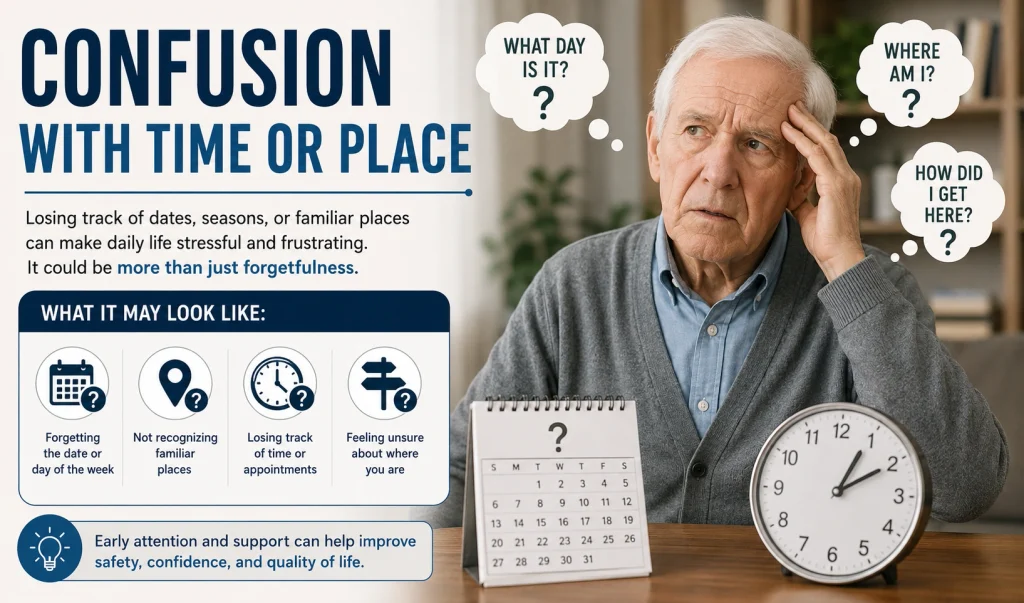
Individuals with early-stage dementia can forget dates, seasons, and the flow of time.
They might:
- Forget what day it is
- Miss important events
- Become confused about where they are
- Have difficulty recognizing familiar locations
Occasional date confusion is common with aging, but persistent disorientation deserves medical attention.
4. Having Difficulty Choosing the Correct Terms
Language difficulties often appear gradually.
Someone may:
- Pause frequently during conversations
- Substitute incorrect words
- Forget common object names
- Difficulty keeping up with talking
Example: They are unable to retrieve the right word, so they may call a “watch” a “hand clock.”
5. Putting Things in the Wrong Place and Losing the Ability to Go Back Over One’s Steps
Now and then, everyone puts their keys in the wrong place. The difference is that people with dementia frequently are unable to backtrack their steps to find lost things.
Common examples:
- Putting a wallet in the refrigerator
- Leaving glasses in unusual places
- Accusing others of stealing misplaced belongings
That sign is “a frustration and anxiety in and of itself.”
6. Poor Judgement and Weak Decision Making
Disordered thinking may also cause people to make poor financial, personal and safety decisions.
Common examples of such decisions are:
- Spending large amounts of money on con artists
- Dressing in a way that’s inappropriate to the weather conditions
- Not bathing or showering
- Making ill-advised purchases
Judgment may be impaired long before the condition is recognized by the sufferer or his family.
7. Withdrawal from Social Activities
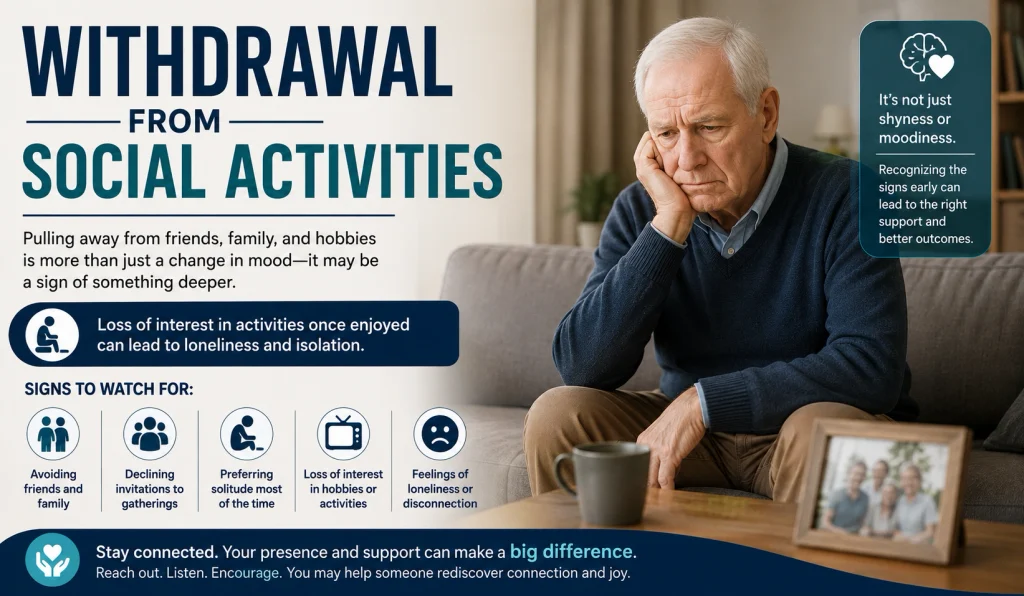
“Struggling with cognition, people may begin to shy away from hobbies, conversations or social activities, as they feel embarrassed about the memory problems they are experiencing.”
Signs include:
- Quitting favorite activities
- Avoiding group conversations
- Declining invitations
- Losing interest in previously enjoyable hobbies
Social withdrawal should never be dismissed as simply “getting older.”
8. Changes in mood and personality
This decline can also greatly influence age and behavior—due to the early stages of dementia.
A person may become:
- More anxious
- Easily irritated
- Suspicious of others
- Depressed
- Fearful in unfamiliar environments
These changes result from both brain changes and the frustration of cognitive decline.
9. Difficulty Completing Familiar Tasks
Routine activities may suddenly become confusing.
Examples include:
- Driving to familiar places
- Operating household appliances
- Cooking regular meals
- Using a television remote
- Following workplace procedures
When familiar routines become consistently difficult, professional evaluation is recommended.
10. Problems with Visual and Spatial Awareness
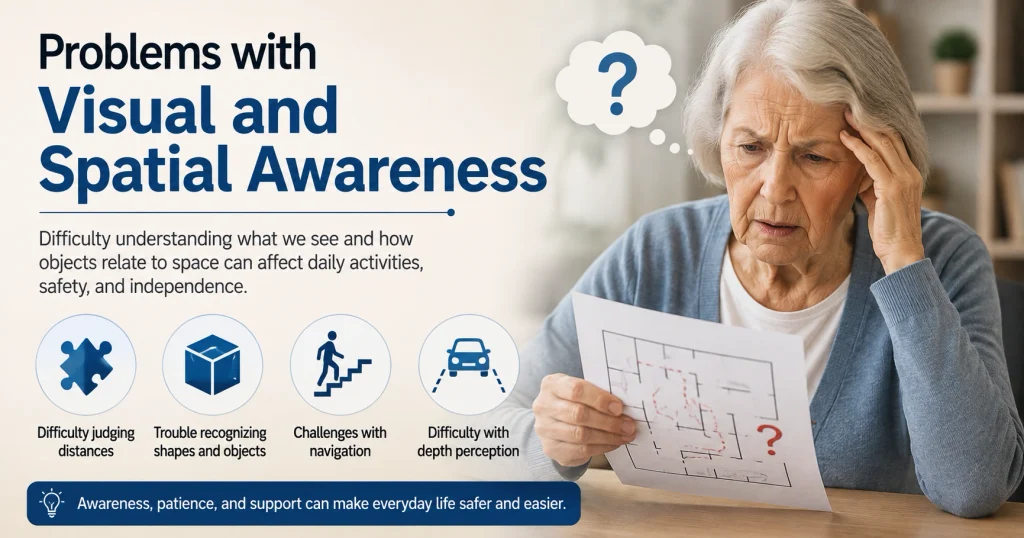
Certain types of dementia may impair the brain’s processing of visual data.
Symptoms may include:
- Trouble gauging distance
- Trouble recognizing faces
- Problems reading
- Increased falls due to poor depth perception
These issues are neurological rather than eyesight problems alone.
Dementia vs Typical age related changes
Knowing the difference can prevent unnecessary concern but ensure that proper medical attention is received.
| Normal Aging | Early Dementia |
| Occasionally forgetting appointments | Frequently missing appointments |
| Forgetting a word sometimes | Regular language difficulties |
| Misplacing keys occasionally | Losing items in unusual places repeatedly |
| Making occasional mistakes | Consistent poor judgment |
| Forgetting why you entered a room | Getting lost in familiar places |
The key distinction is interference with daily life.
What causes dementia d?
In dementia, brain cells are damaged or die.
Causes of brain damage are:
- Alzheimer’s disease
- Reduced blood flow to the brain
- Lewy body disease
- Frontotemporal degeneration
- Repeated head injuries (in some cases)
Certain dementia-like disorders are treatable and may be reversible
such as:
- Vitamin b12 deficiency
- Thyroid disorders
- Depression
- Medication side effects
- Severe infections
This is why medical evaluation is essential.
High Risk Population?
Background Multiple factors are known to contribute to an increased risk of dementia.
Non-modifiable risk factors”
- Age over 65
- Family history
- Certain genetic conditions
Modifiable Risk Factors
- High blood pressure
- Diabetes
- Smoking
- Physical inactivity
- Obesity
- Excessive alcohol use
- Poor sleep quality
Controlling for these factors could therefore promote long-term brain health.
How is dementia diagnosed?
Dementia cannot be definitively diagnosed by any test. Doctors combine multiple assessments.
Evaluation may include:
- 1. Medical history
- 2. Physical examination
- 3. Cognitive screening tests
- 4. Blood testing
- 5. Brain scanning (MRI or CT)
- 6. Physical examination of the nervous system
Early identification is informative for treatment and planning for the future.
Therapy and handling
Currently, the majority of types of dementia are not curable, though there are treatments which may slow the progression of symptoms and enhance the quality of life.
Options for treatment include:
- Prescription medications (as appropriate)
- Cognitive stimulation therapy
- Physical exercise
- Healthy Mediterranean-style nutrition
- Social engagement
- Sleep management
- Treatment of underlying medical conditions
Care plans should always be individualized.
When in need of should you see a doctor?
When to consult a doctor about problems with memory or thinking If you’re worried about your thinking or memory:
- They interfere with your routine activities)
- Worsen over several months
- Cause getting lost in familiar places
- Affect finances or medication management
- Lead to personality or behavioral changes
Early evaluation can detect dementia as well as treatable diseases.
Living a healthy brain advice
No living or activity style can guarantee prevention, but research suggests these lifestyle habits are associated with healthy aging.
The Good News about Habits That Support Brain Health Daily
- Get a minimum of 150 minutes of exercise a week.
- Have a lot of vegetables and good fats.
- Manage your blood pressure and blood sugar.
- Maintain/have an active social life.
- Stimulate your mind with reading or games.
- Sleep 7 to 9 hours a night.
- Don’t smoke, and drink up to a little.”
Small – but consistent – changes can have significant benefits over time.
External Links
- World Health Organization (WHO): Dementia fact sheets and public health guidance.
- Alzheimer’s Association: Education, caregiver resources, and early symptom information.
- National Institute on Aging (NIA): Evidence-based research on Alzheimer’s disease and dementia.
Internal Links
- Best Brain-Healthy Foods for Memory
- Early Symptoms of Alzheimer’s Disease
- Healthy Aging: 12 Daily Habits for Better Cognitive Health
- Mediterranean Diet vs Keto: Which Is Better for Brain Health?
Conclusion
Knowing what the 10 common early warning signs of dementia are can help you receive the right medical attention and care that you require. Meanwhile, minor forgotten details and occasional confusion are normal in the aging mind and confusion, communication and judgment difficulties, and changes to someone’s personality may indicate dementia. If you or your family members are exhibiting any of these behaviors, schedule a visit with a doctor. Early diagnosis = better life, for those with dementia.
FAQs
1. What if a person has early symptoms of dementia?
The first signs of this are likely to appear in memory loss, which then affects day-to-day activities — forgetting recent conversations, or repeatedly asking the same information.
2. Is it normal to forget a name from time to time?
It is normal for the name of a person to escape you after some time, but that loss of memory over a period of time might be an indication that you are on the brink of dementia.
3. Chance of getting dementia with advancing age?
It also is more common in people over age 65 but younger people can get it as well.
4. Can you prevent dementia?
There’s no certain way to prevent the disease now, but a nutritious diet, including less salt and more exercise, while maintaining appropriate cholesterol levels, can significantly reduce risk.
5. Does depression lead to dementia?
Depression can also contribute to bringing on the disease, but can also mimic some of the symptoms.
6. Can dementia be inherited? Is there a gene that causes dementia?
Te Genetics of Dementia We now know that genes can play a powerful role in dementia – and more and more people are discovering they have one or more genes linked to the disease.
Disclaimer:
This article is for educational purposes only and does not replace professional medical advice, diagnosis, or treatment. Always consult a qualified healthcare provider regarding concerns about memory or cognitive changes.
1 thought on “10 Common Early Warning Signs of Dementia: A Complete Guide to Recognizing Symptoms Early”