
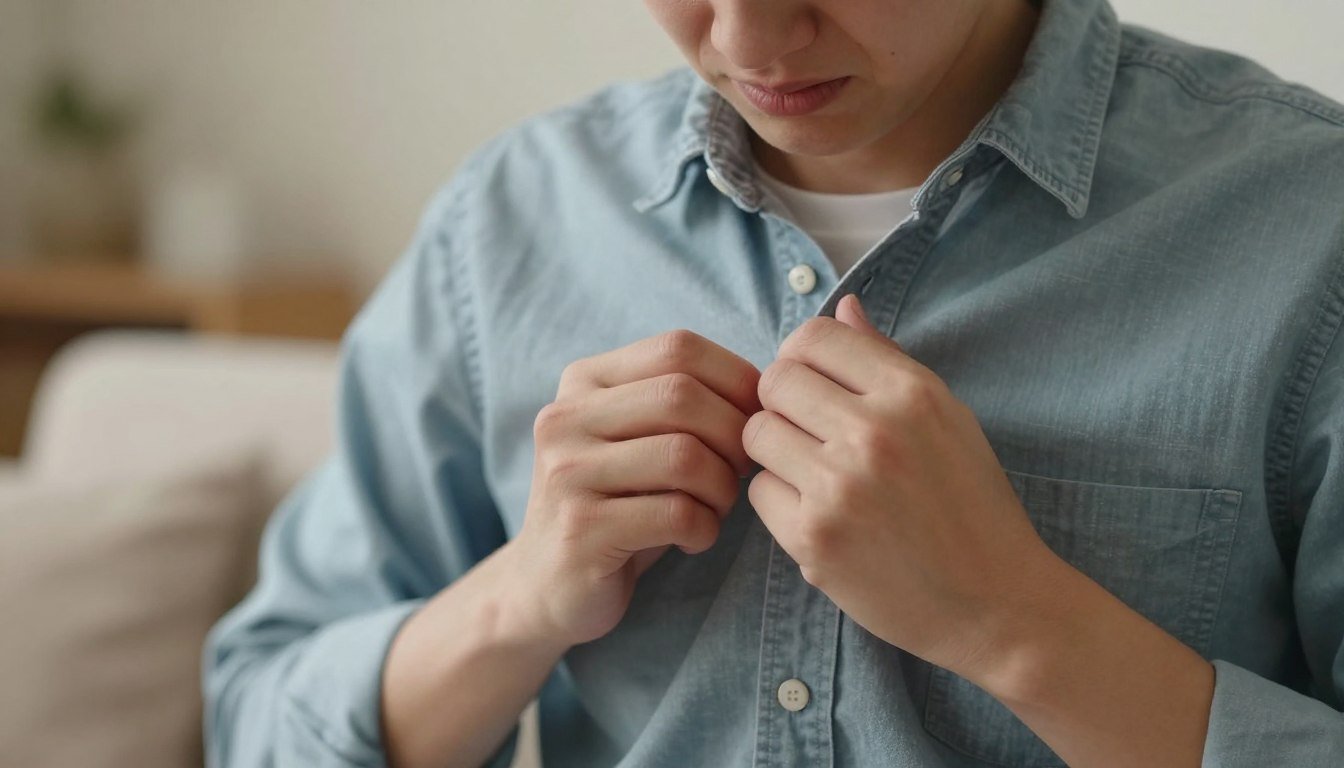
A sore finger can turn an ordinary task, such as fastening a button, into a frustrating effort. Each finger has three joints, and trouble in any one can affect how you use your hand. Pain may come from a joint, tendon, injury, or inflammation. Arthralgia means pain in one or more joints, without specifying its cause.
For many people, even small hand problems can disrupt work, hobbies, and daily activities. The right response depends on what is causing the discomfort, so treating every sore finger the same way may not help. This guide separates steps you can try at home from signs that call for medical care.
Key Takeaways
- Finger pain can come from a joint, tendon, injury, or inflammatory problem.
- The location and pattern of symptoms offer clues, but do not prove a diagnosis.
- Home care may help mild symptoms after a strain, while some signs need prompt care.
- A clinician can choose tests and treatment based on your symptoms and exam.
- Note which finger and joint are affected, and whether the discomfort began suddenly or gradually.
Which Finger Joints Hurt, and What Do the Symptoms Suggest?
The exact knuckle that hurts can help narrow down what is irritating your hand. Pain location, stiffness, and swelling offer clues, but they cannot confirm arthritis on their own.
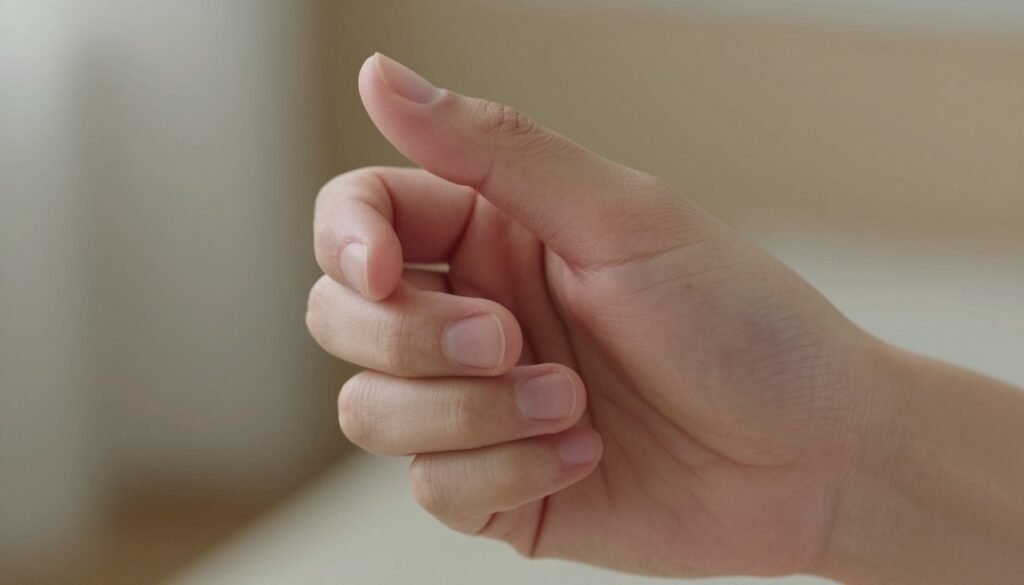
Each finger has three joints: the metacarpophalangeal (MCP) joint where it meets the hand, the proximal interphalangeal (PIP) joint in the middle, and the distal interphalangeal (DIP) joint nearest the fingertip. The thumb-base joint is the carpometacarpal (CMC) joint. Osteoarthritis (OA), or wear-and-tear arthritis, often affects DIP and CMC joints, and sometimes PIP joints.
What Are the First Signs of Arthritis in Fingers?
Early signs of arthritis in fingers can include pain, stiffness, swelling, warmth, and less movement. OA may make a joint feel enlarged or bumpy as bone changes form near it. These firm bumps can make bending or straightening a finger harder.
Rheumatoid arthritis (RA), an autoimmune inflammatory arthritis, often affects MCP and PIP joints. Redness, warmth, swelling, reduced motion, or a changed joint shape are useful clues, not proof of one condition.
Why Can the Distal Interphalangeal Joint Hurt When Pressed?
DIP pain when pressed can come from irritation within the joint, including OA or an injury. A hard bump near the fingertip may be a bony node linked with arthritis. Pain that persists when you press the DIP joint deserves attention, especially with swelling or reduced movement.
Pressure pain alone does not tell you whether cartilage, bone, or nearby tissue is involved. Note whether the fingertip joint also hurts when you bend it or grip an object.
What Does the Pattern of Stiffness Reveal?
Stiffness after sleep or rest can occur with arthritis, while pain that grows with use may point to joint strain or irritation. RA often affects matching joints on both sides of the body, while OA may affect fewer joints unevenly.
Morning stiffness, swelling, warmth, and movement limits can help a clinician understand the pattern. Record whether stiffness eases after moving the finger or whether use makes it worse.
What Causes Pain in the Joints of the Fingers?
Two people with pain in the same finger can have different underlying problems, such as cartilage wear in one case and tendon irritation in another. More than 100 types of arthritis can affect joints, and finger pain can also come from injury or nearby tissue.
Finger joint pain when bending may arise from joint or tendon irritation. Distal interphalangeal joint pain when bending can follow arthritis or injury, so the movement that hurts is one useful clue.
Osteoarthritis and Rheumatoid Arthritis
OA involves cartilage breakdown, the loss of smooth tissue that helps bones move against each other. It often affects DIP or thumb-base joints, and may also affect PIP joints. Pain, stiffness, and bony changes can limit how far you bend a finger.
RA happens when the immune system mistakenly attacks joint tissue. It commonly affects MCP and PIP joints, often on both sides of the body. RA can also bring fatigue, low-grade fever, sweating, appetite changes, or poor sleep.
In some people, RA causes inflammation involving the heart, lungs, or eyes. A clinician can assess these symptoms along with your joint pain rather than treating each symptom alone.
Psoriatic Arthritis and Gout
Psoriatic arthritis can affect the DIP joints and may occur with psoriasis. Small pits or dents in the nails, called nail pitting, can be a clue. Nail changes do not confirm the cause, so mention them during an exam.
Gout can affect finger joints when uric acid crystals build up. Certain foods or drinks may trigger flares for some people, but triggers vary. Nail pitting may accompany psoriatic arthritis, which can help guide a discussion with your clinician.
Injuries, Tendon Problems, and Other Causes
A sprain stretches a ligament, while a strain affects a muscle or tendon. A hard hit or fall can also cause a dislocation or fracture. Infection is another possible cause, especially when a joint becomes hot, red, and very painful.
Tendonitis and tenosynovitis, or irritation of a tendon and its covering, can cause pain and restricted movement. A ganglion cyst is a fluid-filled lump that can form near a finger joint.
Diabetes-related hand conditions include Dupuytren’s contracture, carpal tunnel syndrome, and neuropathy. These may cause stiffness, tingling, weakness, or changes in hand movement, rather than pain from the joint alone.
What Causes Pain in the Finger Joints?
Pain in the finger joints can stem from arthritis, gout, an injury, tendon irritation, infection, or a cyst. The location and timing can help point toward a cause, but similar symptoms can overlap.
A sudden, intensely painful red joint is different from gradually increasing stiffness and deserves prompt assessment.
How Is Index Finger Joint Pain Without Swelling Evaluated?
A finger can hurt without looking swollen, so the examination focuses on more than appearance. Index finger joint pain with no swelling can still involve early arthritis, tendon irritation, or an injury. The absence of swelling alone cannot identify the cause.
A clinician will ask when symptoms began and which movements make them worse. They may check how your finger bends, where it feels tender, and whether nearby joints also hurt. Imaging or blood tests depend on the conditions being considered.

| Test | What it can show | When it may help | Limitation |
|---|---|---|---|
| Physical exam | Tenderness and finger motion | At an initial visit | May not show hidden tissue changes |
| X-ray | Bone shape and joint changes | When arthritis or injury is suspected | Does not show all soft tissue |
| Blood tests | Inflammation, immune activity, or uric acid | When RA or gout is possible | Results need symptom context |
| MRI or ultrasound | Connective and soft tissues | When tendon or tissue problems are suspected | May not be needed for every case |
Hand X-rays can show bone changes, including Heberden’s nodes near DIP joints. Blood tests may check rheumatoid factor or uric acid, while MRI or ultrasound can show soft tissue. Blood tests may indicate inflammation or immune activity, but no single result explains every painful finger.
Tell the clinician which motions trigger pain and whether the symptoms followed an injury.
What Can You Do at Home Today?
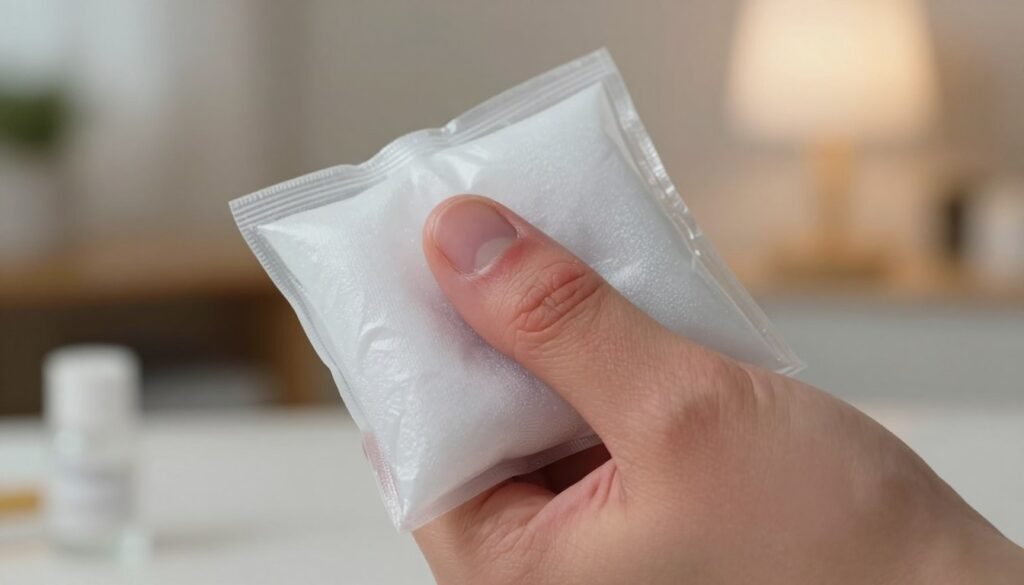
If a finger is mildly swollen after a strain, pause the activity and protect it rather than testing it with repeated gripping. For a swollen finger, apply a wrapped ice pack for 10-15 minutes at a time. Never place ice directly on your skin.
Swelling can follow heat, pregnancy, fluid retention, arthritis, a strain, or a sprain. Infection and lymphedema, a buildup of fluid, can also cause swelling. A very swollen finger that is hard to move or very painful to touch needs prompt care because infection is possible.
- Rest the finger for a few days after an acute injury.
- For an acute injury, apply wrapped ice for 20 minutes, 4-8 times daily.
- Use gentle compression with a bandage that does not restrict circulation.
- Raise the hand above your heart when you can.
The 20-minute ice routine applies to acute injuries; swollen fingers may need shorter 10-15-minute sessions. Stop if the skin becomes numb or painful. Compression should feel supportive, not tight enough to change the finger’s color or sensation.
During repetitive tasks, pace your gripping and take breaks before discomfort builds. A splint can support a specific joint, but it should not cause numbness or make pain worse. A 2019 study found a tin-alloy splint was a safe, simple option for reducing DIP pain symptoms. That finding does not make it right for every finger.
Remove any wrap or splint that causes numbness, color change, or worsening pain.
Which Nonsurgical Treatments Can Ease Finger Arthritis?
For hand osteoarthritis, topical anti-inflammatory medicine is a strongly recommended nonsurgical option in the 2026 ACR update. The update strongly recommends topical NSAIDs and conditionally favors them over oral NSAIDs for hand OA.
Topical diclofenac is one type of nonsteroidal anti-inflammatory drug (NSAID), a medicine that reduces pain and inflammation. It can target a sore area, though you should still discuss safe use with a clinician or pharmacist.
Which Treatments Help Arthritis in Fingers?
Treatment for arthritis in fingers may include pain medicine, exercise, therapy, a brace, or an injection. Acetaminophen and oral NSAIDs can ease pain, but each has risks that depend on your health and other medicines.
The 2026 ACR update conditionally recommends hand exercise and finger-joint orthoses, or supports, for hand OA. Evidence for orthoses is low certainty. A hand therapist can tailor movement and joint protection to your daily activities.
The update also conditionally recommends steroid injections for hand OA, with low-certainty evidence. For erosive hand OA, it conditionally recommends methotrexate; the reasoning behind that recommendation had not yet been published when the update page was written.
For RA or psoriatic arthritis, disease-modifying antirheumatic drugs (DMARDs) can address the immune-driven disease. Gout medicines such as allopurinol or colchicine treat gout, not every type of joint pain. Hand exercise and finger-joint supports are options to discuss, not a substitute for a plan that fits your diagnosis.
Can You Cure Finger Joint Pain?
Finger joint pain cannot be cured with one treatment for every cause, but targeted care can reduce pain and help preserve hand function. A splint may support a joint, while therapy can help you move it with less strain.
Some treatments ease symptoms without changing the underlying condition. Others, such as DMARDs for inflammatory arthritis, aim to control disease activity. Ask about medication risks, interactions, and how long to try a treatment.
Match each treatment to a confirmed or likely cause instead of combining medicines on your own.
Can You Slow Finger Arthritis or Reverse It?
Treatments can help you use your hands more comfortably, but established cartilage loss is not currently reversed. Exercise, joint protection, and care for other health conditions can support hand function, but no method guarantees that arthritis will stop progressing.
Research on finger OA progression has limits. A 2020 review found that all eight eligible studies measured changes on X-rays, not changes in symptoms. That means the studies did not show whether those bone changes matched how people felt or used their hands.
Can Arthritis in Fingers Be Reversed?
Established cartilage loss cannot currently be reversed, though treatment may ease symptoms and support movement. The 2026 ACR update conditionally recommends against vitamin D and fish oil for hand OA.
A 2019 review found no progression benefit from supplements in trials where vitamin D levels were generally above 50 nmol/L. Some smaller analyses and one randomized pilot trial suggested possible pain relief below that level. Those findings do not establish vitamin D as a general treatment or define a level that prevents OA.
What Does Research Say About Progression Risks?
Evidence about factors linked with finger OA progression remains limited. A 2020 review found a possible link between diabetes and X-ray changes, with adjusted mean differences from 2.06 to 7.78. A larger finger epiphyseal index, a measure of bone shape, also showed a limited link.
That link had β values of 0.202 in males and 0.325 in females. Evidence about older age was mixed, and 13 other assessed factors were not identified as risks, though the evidence was limited.
Keep these four steps practical:
- Do hand exercises that fit your comfort and ability.
- Protect sore joints during gripping by using larger handles when possible.
- Work with a clinician to manage chronic conditions such as diabetes.
- Stay active in ways that suit your current movement and energy.
Gout triggers vary from person to person, so one food or drink may affect you differently than someone else. Ask your clinician whether a suspected deficiency or a gout trigger is relevant to your own symptoms before changing supplements or diet.
When Does Finger Arthritis Surgery Help?
Surgery is usually considered when ongoing pain remains limiting despite nonsurgical treatment. Finger arthritis surgery may ease pain, but it usually does not restore lost movement or activities that arthritis made impossible.
The right procedure depends on which joint hurts and how much stiffness you can accept. Fusion joins the bones to make a stable joint, while a silicone implant replaces joint surfaces and may preserve more motion.
| Option | Pain or stability aim | Effect on movement | Main limitation |
|---|---|---|---|
| Fusion | Stable, often pain-free joint | Little or no joint motion | Bone may not unite or align |
| Silicone joint replacement | Reduce pain and support motion | May preserve more movement | Up to 30% fail within 10 years |
| Continued nonsurgical care | Manage pain without an operation | Does not directly change joint motion | Symptoms may remain limiting |
Fusion is commonly used for DIP arthritis and often creates a stable, pain-free, reasonably useful joint. The trade-off is little flexibility at that joint. Failure of the bones to join or line up properly is the most serious concern, and it may require another operation.
Silicone implants can keep more motion, but up to 30 percent fail within 10 years. Surgery may relieve pain without restoring the range of motion you once had. Age, activity level, the affected joint, and your tolerance for stiffness all shape the choice.
Ask the surgeon what movement you are likely to retain in the specific joint being considered.
When Should You Seek Medical Care?
A finger that suddenly cannot move, or becomes red and hot with fever, needs prompt medical attention. A hot, red joint with fever can signal infection and should not be managed only at home.
Seek prompt care for these warning signs:
- Numbness or tingling in your hand or fingers.
- Swelling or deformity after an injury.
- A sudden loss of grip strength.
- Inability to move a finger.
- Redness or warmth with a fever.
Severe pain, fast-worsening symptoms, or a finger that becomes discolored also needs prompt assessment. If you have a recent injury, swelling or a changed finger shape can signal damage that needs care.
Persistent pain can often be booked for a routine evaluation instead. Arrange an appointment if hand or wrist pain has not improved after 7-10 days of rest, ice, and over-the-counter medicine.
Describe when the symptoms started, what changed, and whether pain affects daily tasks. Seek help sooner if symptoms become severe or movement drops quickly. If symptoms are worsening quickly or you are unsure how urgent they are, contact a healthcare professional rather than waiting out the usual recovery window.
Conclusion
The most useful first step is to notice what your finger can and cannot do. Joint location and symptom patterns offer clues, but they do not replace a diagnosis. A clear record can help a clinician understand what is changing.
Write down which finger hurts, what movement triggers the pain, and how long symptoms have lasted. Arrange an evaluation if pain persists or affects your ability to work, dress, or handle daily tasks. Bring your symptom notes to a clinician if the discomfort persists, worsens, or limits daily activities.
FAQ
What could be causing my swollen knuckle?
A swollen knuckle can come from arthritis, injury, fluid retention, or infection. Heat and pregnancy can also cause finger swelling. A hot, very painful, or rapidly swelling knuckle needs prompt assessment, since infection may need urgent care. Note when the swelling began and whether you can still bend the finger.
What are some good stretches for joints?
Gentle finger bending and straightening can help maintain movement. Move only as far as feels comfortable, and stop if an exercise sharply increases pain. A hand therapist can show you exercises suited to the sore joint and your daily needs. Avoid forcing a stiff finger through a painful range.
How to stop progression of arthritis in fingers?
No method guarantees that arthritis in your fingers will stop progressing. Hand exercise, joint protection during gripping, and care for health conditions can support function. Research on progression risks remains limited, so one risk factor does not predict what will happen to your hands. Ask a clinician for care suited to your condition.
What is arthralgia?
Arthralgia means pain in one or more joints, without specifying its cause. It describes a symptom, not a diagnosis. A sore finger joint may be called arthralgia whether the cause is arthritis, an injury, or another problem. Your other symptoms and an exam help narrow down the reason.
What are the 5 worst foods for joint pain?
There is no universal, evidence-based list of five foods that worsen all joint pain. Some foods or drinks can trigger gout flares for an individual, but triggers differ. Keeping a brief food and symptom record may help you notice a pattern. Ask your clinician before making major diet changes.
How do I stop my joints from hurting?
The best way to ease joint pain depends on its cause. Reduce activities that make it worse, and use short-term support that does not cause numbness or more pain. Persistent or severe symptoms need medical evaluation. A clinician can help choose treatment based on the joint, your health, and the likely cause.
What vitamin gets rid of joint pain?
No vitamin is established to get rid of joint pain. Vitamin D evidence is mixed for pain in people with low levels, and trials with levels generally above 50 nmol/L found no progression benefit. A possible pain finding in people with low levels does not prove that supplements treat joint pain for everyone.
What is the difference between joint pain and arthritis?
Joint pain is a symptom, while arthritis is a group of conditions that affect joints. Pain alone does not establish an arthritis diagnosis. An injury or tendon problem can also hurt near a joint. A clinician considers your symptoms, exam, and any needed tests to identify the cause.