
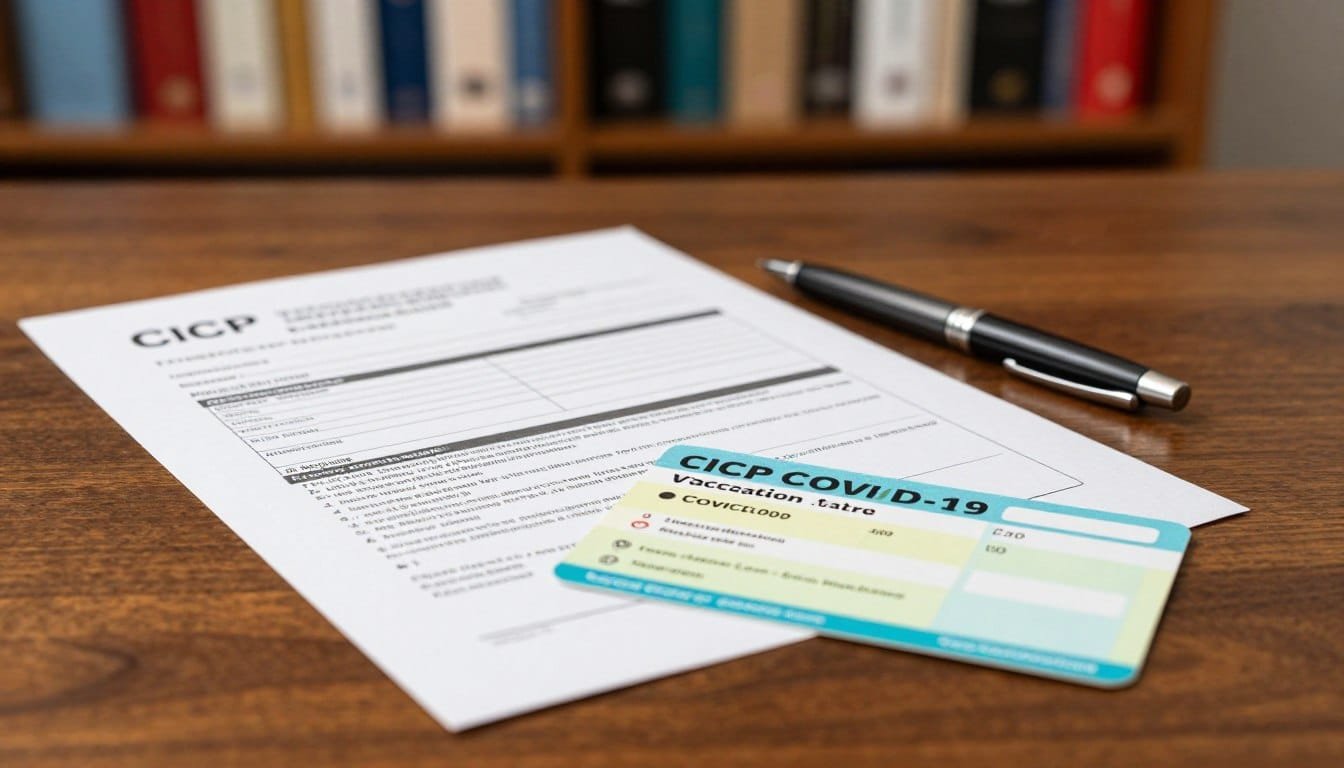
A suspected COVID-19 vaccine injury in the United States is generally considered through a federal program, not a standard vaccine-injury lawsuit. The “COVID Vaccine Compensation Scheme” is a useful topic label, not the official name of a U.S. program. The Countermeasures Injury Compensation Program (CICP) is the main federal route for these claims.
Causation means an evidence-supported link between vaccination and the claimed injury, not simply the fact that symptoms began afterward. Your legal rights may depend on the program’s criteria, your evidence, and a strict filing deadline. This overview answers common claim questions tied to the U.S. public health emergency.
The CICP differs from the familiar National Vaccine Injury Compensation Program (VICP), which handles claims involving covered routine vaccines. Knowing which route generally applies can help you focus your next steps.
Key Takeaways
- The CICP generally handles claims involving COVID-19 vaccines.
- The VICP covers certain routine vaccines, not COVID-19 vaccine claims.
- Symptoms after vaccination alone do not prove causation.
- The CICP has a one-year filing deadline in most cases.
- Keep your vaccine, health, cost, and income records together.
How Does the COVID Vaccine Compensation Scheme Work in the United States?
COVID-19 vaccine claims generally belong in the CICP, while the VICP handles claims involving its covered routine vaccines. The CICP is the federal route for claims involving covered COVID-19 vaccines.
The two programs use different laws, review paths, and funding. Those differences matter when you decide where to direct a claim or look for a COVID vaccine lawsuit update.
Why COVID-19 vaccine claims go to the CICP
The CICP operates under the Public Readiness and Emergency Preparedness Act, often called the PREP Act. The Department of Health and Human Services (HHS) administers the program.
The PREP Act supports emergency use of certain countermeasures, including covered vaccines. It also sets rules for compensation tied to serious injuries linked to those countermeasures.
For that reason, COVID-19 vaccine injury claims generally go through the CICP rather than the VICP. The program’s official name is important when you search for a claim page or read filing instructions.
The word “scheme” may appear in general searches, but it does not name a separate U.S. benefit plan. Use the CICP name when checking federal instructions or organizing claim papers.
A program change and a court case are different things. A COVID vaccine lawsuit update may describe new guidance, a court ruling, or a settlement, and each has a different effect.
How the CICP differs from the VICP and who funds each program
The VICP covers claims involving vaccines listed under its rules. It does not serve as the route for COVID-19 vaccine injury claims.
The VICP uses a special court process, while the CICP reviews claims through HHS. This makes the CICP review different from a typical lawsuit in court.
Funding also differs. The VICP is funded through an excise tax on covered vaccine doses, while CICP compensation comes from a federal fund.
The VICP tax applies to covered doses and helps support that program’s awards and costs. If you ask who funds the Vaccine Injury Compensation Program, the answer is the excise tax on those covered doses.
The federal Countermeasures Injury Compensation Fund pays CICP compensation. This funding does not mean a manufacturer directly pays an individual award.
Those separate funding systems do not decide whether a particular person qualifies. Your claim still depends on the rules for the program that handles it.
The program choice is the first practical distinction, not a prediction about the outcome. Next, consider who may qualify and what losses the CICP may address.
Who Can Qualify, and What Compensation May Be Available?
Two people with symptoms after the same vaccine may have different outcomes because eligibility depends on the injury and its supporting evidence. A symptom after vaccination alone does not establish vaccine injury eligibility.
A claim must meet the program’s criteria for a serious covered injury. The evidence must support causation, meaning a link between the vaccination and the claimed injury.

What counts as an eligible injury
An adverse event is a health problem reported after vaccination. Its timing may be important, but timing alone cannot show that the vaccine caused it.
The CICP reviews the type and seriousness of the injury, along with medical and scientific evidence. A diagnosis, treatment records, and a clear account of symptoms can help explain the claim.
There is no automatic payment for compensation for COVID vaccine side effects. A claimant must show an eligible injury and meet the program’s evidence rules.
Medical care may also help separate a brief reaction from a more serious condition. A record that tracks the symptom, diagnosis, and treatment gives reviewers more context.
Which losses the CICP may cover
The CICP may reimburse eligible medical expenses that another source has not paid. It may also cover eligible lost employment income and provide survivor death benefits.
The CICP does not pay for pain and suffering. VICP compensation may include pain and suffering within statutory limits, so the two programs do not offer the same forms of relief.
Covered losses depend on the program’s rules and the facts in your claim. The table compares key differences without predicting an individual result.
| Claim detail | CICP | VICP |
|---|---|---|
| COVID-19 vaccine claims | CICP route | Not the route |
| Program review | HHS administrative review | U.S. Court of Federal Claims |
| Pain and suffering | Not covered | May be covered within statutory limits |
| Eligible losses | Specified medical, income, and survivor benefits | Compensation under VICP rules |
For example, an unpaid medical bill may matter if it relates to an eligible injury and meets the program’s rules. A bill already paid by insurance is not an unreimbursed expense.
Lost income also requires proof that the injury affected your ability to work. Survivor benefits follow separate conditions when a claimed injury results in death.
The table shows why it helps to identify the right route before estimating possible compensation. Once you understand the criteria and possible losses, gather the records needed to make a claim.
How Do You File a CICP Claim and Show That the Vaccine Caused an Injury?
If your symptoms began after vaccination, start by matching the vaccination date to medical records and a clear timeline of the injury. CICP claims generally must be filed within one year after administration or use of the covered countermeasure.
The CICP requires compelling, reliable, and valid medical and scientific evidence. A careful record set can show what happened, when it happened, and how the injury affected you.

Records that support your claim
Gather records that tie the vaccine date to your diagnosis, care, and losses. A CICP claim page can help you find current forms and instructions.
- Vaccination record showing the date and vaccine received.
- Medical records, test results, and the diagnosis for the claimed injury.
- A dated symptom and treatment timeline, or draft claim chronology.
- Proof of eligible medical costs that remain unpaid or unreimbursed.
- Records of lost income or death, when relevant to the claim.
Use dates from your records when you build a draft claim chronology. Note the first symptom, each medical visit, tests, treatment, and any change in your ability to work.
Do not treat a close timeline as proof by itself. Timing can support a claim, but it does not establish causation without medical and scientific evidence.
Keep full copies of records, including bills and work documents. If records use different dates or names for the same condition, make a note so you can explain the difference.
Submission steps, review, and deadlines
Use the current program directions to prepare the claim. Follow the filing steps in order and keep proof of what you send.
- Read the current CICP instructions and check the claim page.
- Complete the required claim form with accurate dates and details.
- Attach medical, vaccination, cost, income, or death records that support your claim.
- Submit the claim within the one-year deadline.
- Keep copies of all papers and the submission confirmation.
The deadline generally runs from the date the covered countermeasure was given or used. Missing it can prevent a claim from moving forward, so do not wait for every question to resolve before checking the date.
HHS reviews the material under CICP rules. The program requires strong medical and scientific support, not only a report that symptoms followed vaccination.
CICP decisions do not have ordinary judicial review. That limit makes a complete and clear submission especially important before you send the claim.
A COVID vaccine lawsuit settlement is not the same as an individual CICP claim or award. A settlement concerns a specific legal matter, while the CICP makes a separate administrative decision.
People considering other legal options should understand how those options differ from CICP review.
Can You Sue Pfizer or Join a COVID Vaccine Class Action?
A CICP claim does not automatically give you the right to sue a vaccine maker or join a class action. The PREP Act limits many lawsuits involving covered countermeasures, but it has a narrow willful-misconduct exception.
Whether you can sue Pfizer over a COVID vaccine injury depends on the facts and the law that applies. Do not assume a lawsuit is available just because an injury began after vaccination.

What to know about lawsuits and settlements
A class action is a court case brought for a group under set legal rules. It is not the same as filing your own CICP claim, and a group case does not guarantee payment to every person.
Reports about a Johnson and Johnson COVID vaccine lawsuit settlement do not create a general right to a settlement or a set payment amount. The details of any case matter.
Check current court records for case-specific facts before relying on a news report. A qualified lawyer can explain whether an exception or another legal route may apply to your situation.
You can also read this general information disclaimer before relying on website content. It explains that online information is not a substitute for legal or other professional advice.
How long-term effects and side effects relate to a claim
Common short-term COVID-19 vaccine side effects include arm soreness, fatigue, headache, muscle pain, and fever or chills. These reactions often differ from a persistent injury that needs medical assessment.
Myocarditis and pericarditis are rare serious adverse events associated with mRNA COVID-19 vaccines. Ongoing symptoms call for a medical review, but they do not prove the vaccine caused them.
A VAERS report records a health event after vaccination. Reports alone do not show that a vaccine caused an injury, and raw reports cannot establish a vaccine-attributable mortality rate.
Long-term vaccine injury concerns deserve careful medical review and records that describe the course of symptoms. Your claim still needs evidence supporting causation, not timing or a report alone.
Ask a qualified attorney to confirm any case-specific legal route, with your medical records in hand.
Conclusion
Your first decision is whether your concern belongs in a CICP claim or requires separate legal advice. The CICP generally handles federal claims tied to COVID-19 vaccine injuries.
Eligibility depends on a documented injury, evidence of causation, and meeting the filing deadline. Your next step is concrete: gather your vaccination date and medical records, then check the current CICP instructions and deadline.
FAQ
What is the average payout amount from the National Vaccine Injury Compensation Program?
There is no single average that predicts what you may receive from the National Vaccine Injury Compensation Program. Awards depend on the claim, its evidence, and the losses allowed by program rules. VICP figures also do not predict CICP compensation for COVID-19 vaccine claims, because the programs use different rules and review processes.
Does the COVID vaccine stay in your body for years?
No, vaccine components are broken down or cleared from your body rather than staying there for years. Your immune system can keep a memory of the vaccine after those components are gone. That immune memory helps the body respond to the target later, but it does not mean the vaccine itself remains in your body.
Is there a class action lawsuit against Pfizer for the COVID vaccine?
There is no universal class action or settlement that gives every person a claim against Pfizer. Litigation is case-specific, and the PREP Act limits many lawsuits involving covered countermeasures. Check current court records for the status of a particular case. A court case is separate from an individual CICP claim and its review.
Who pays for the vaccine injury compensation program?
The federal Countermeasures Injury Compensation Fund pays CICP compensation. The VICP, which covers certain routine vaccines, gets funding through an excise tax on covered vaccine doses. These are separate funding paths. Neither description means a manufacturer directly pays each person who receives an award.
How to prove vaccine damage?
Use your vaccination record, medical records, diagnosis, and a dated timeline of symptoms and care. The CICP requires compelling, reliable, and valid medical and scientific evidence. Records should explain the injury and support a link to vaccination. Symptoms that began afterward may help set the timeline, but timing alone does not prove causation.
Can the long COVID vaccine cause long-term injuries?
There is no vaccine called the “long COVID vaccine.” COVID-19 vaccines can be linked to rare serious adverse events, including myocarditis and pericarditis after mRNA vaccines. Persistent symptoms need medical assessment, but they do not automatically show that vaccination caused an injury. A claim requires case-specific medical evidence that supports causation.
What are the long-term side effects of the Pfizer COVID vaccine?
Common reactions to the Pfizer COVID-19 vaccine include arm soreness, fatigue, headache, muscle pain, and fever or chills. Myocarditis and pericarditis are rare serious adverse events associated with mRNA COVID-19 vaccines. Ongoing symptoms need medical assessment, since a symptom that persists does not by itself prove the vaccine caused it.
What are the top 5 side effects of the COVID vaccine?
Five common short-term reactions are arm soreness, fatigue, headache, muscle pain, and fever or chills. Reactions vary by person, and not everyone has these effects. A brief reaction is different from a serious or ongoing health problem. Seek medical care for symptoms that concern you, especially if they persist or worsen.