
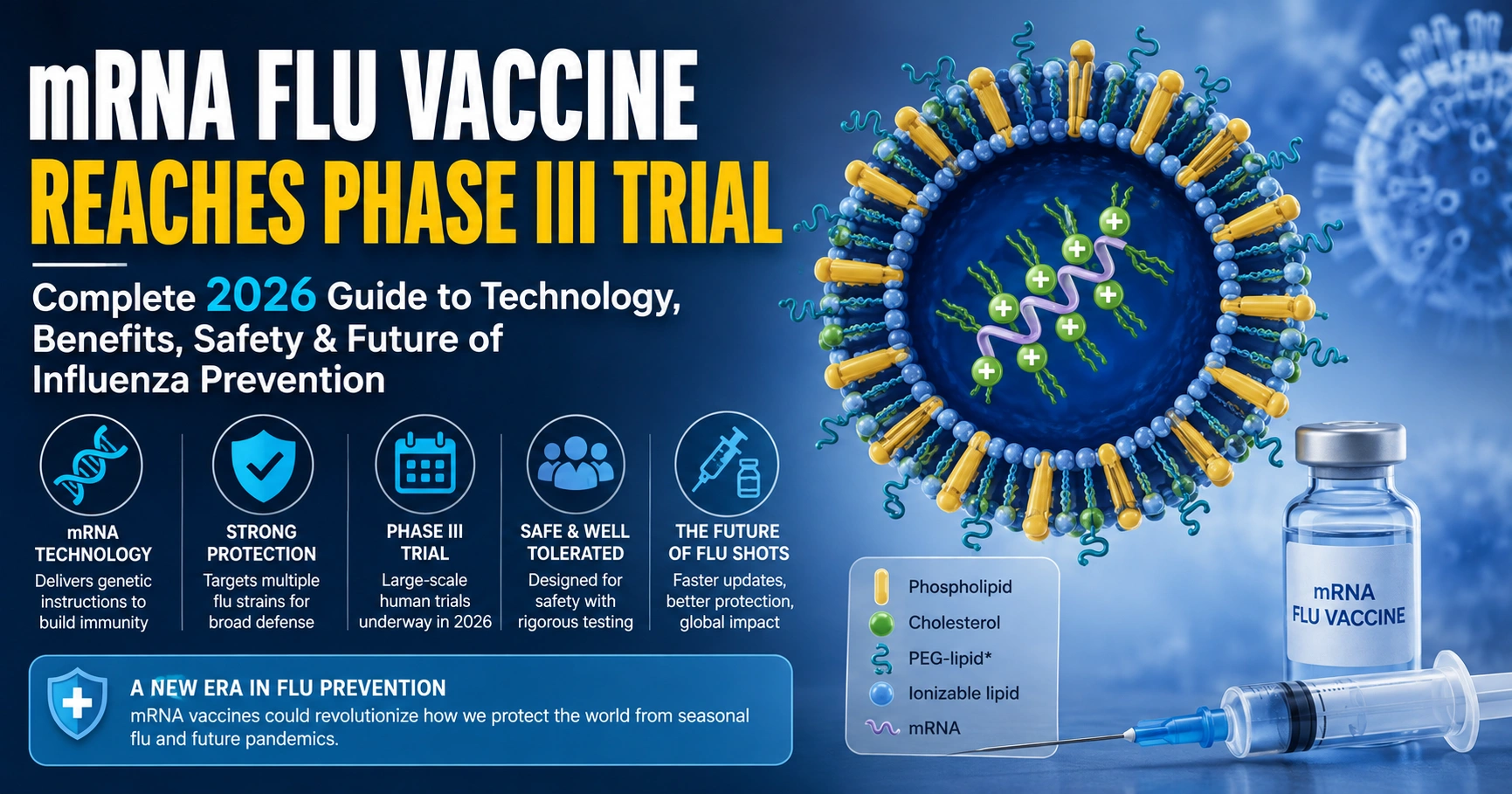
Introduction: mRNA Flu Vaccine Phase III Trial
Seasonal influenza is among the most prevalent infectious diseases globally, resulting in a few million cases and a hundred thousand deaths annually. Although traditional flu vaccination has been used to protect individuals for years, scientists continually seek novel approaches to develop better, faster-manufactured vaccines. One such technology is the mRNA vaccine, one of the most promising of which is currently in phase III of clinical trials, with positive results already demonstrated in large international studies.
mRNA influenza vaccines have been very promising and effective, entering phase III of clinical trials. In 2026, mRNA flu vaccines became a significant scientific achievement, with late-stage trials demonstrating better protection than some traditional vaccination methods against influenza, with regulatory approval for specific groups of people in the United States.
This detailed guide includes information about mRNA flu vaccines, including their mode of action, results from phase III clinical trials, benefits, safety, and side effects, and the future of this new type of vaccination.
What Is an mRNA Flu Vaccine?
An mRNA flu vaccine is a novel influenza vaccine that uses messenger RNA as the vaccine antigen, instead of a live attenuated virus or recombinant protein. mRNA flu vaccine doesn’t introduce you to a dead form of the flu virus, but it tells your cells to create some non-infectious flu parts for a little while, and your immune system learns how to identify and combat them.
How it works
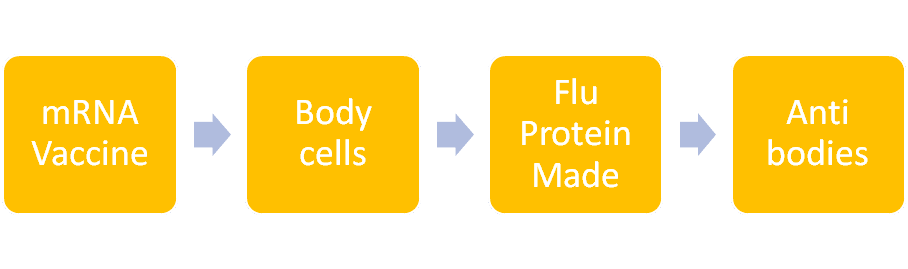
Process in detail:
1. The mRNA is delivered into the muscle tissue by the vaccine.
2. They produce harmless flu surface proteins.
3. The immune system recognizes these proteins.
4. Antibodies and T-cell immunity are created.
5. The mRNA is rapidly degraded and does not alter human DNA.
The process is similar to the one used in the development of the mRNA COVID-19 vaccine, except that this time the vaccine is designed to target the seasonal influenza viruses.
Why mRNA Flu Vaccines Were Developed by Scientists
There are limitations to regular flu vaccines:
| Challenge | Traditional Vaccine |
| Production time | 5–6 months |
| Manufacturing method | Egg-based or cell culture |
| Strain mismatch risk | Moderate |
| Updating new variants | Slow |
mRNA technology addresses many of these problems by allowing researchers to design vaccines rapidly once the genetic sequence of circulating influenza strains becomes available. This could improve the match between vaccines and the viruses spreading each flu season.
Understanding Phase III Clinical Trials
A phase III trial is one of the final and critical steps to getting regulatory approval to market a drug or medical device.
Clinical trial phases
Phase Purpose
- Phase I Initial safety in small groups
- Phase II Immune response and dosing
- Phase III Effectiveness in thousands of participants
- Phase IV Ongoing monitoring after approval
Phase III studies generally involve tens of thousands of participants and are used to compare the new vaccine with existing licensed vaccines to determine if they provide equivalent or better protection.
2026 Phase III Trial Results Explained
An mRNA seasonal influenza vaccine was tested in more than 40,000 adults aged 50 years and older in one of the largest influenza vaccine trials ever conducted. It was compared to a licensed standard- dose influenza vaccine.

Key results
26.6% higher effectiveness
Relative vaccine efficacy versus a standard-dose influenza vaccine in adults 50+.
2.0% vs 2.8% illness rate
RT-PCR confirmed influenza-like illness in the mRNA group compared with the standard vaccine group.
40,000+ participants
Large international Phase III population of adults aged 50 years and older.
The results achieved the trial’s goals for non-inferiority, superiority, and higher-level superiority, making the vaccine one of the highest-performing influenza vaccines studied in the past few years.
Effectiveness comparison
Phase III influenza-like illness comparison
RT-PCR confirmed influenza-like illness in adults aged 50+ during the Phase III trial.
0% 0.75% 1.5% 2.25% 3%mRNA flu vaccine Standard flu vaccine
The lower illness rate translated into a 26.6% relative improvement in protection compared with the standard vaccine.
What Makes This Vaccine Different?
Unlike conventional flu shots that mainly target hemagglutinin (HA) proteins, newer mRNA vaccine candidates are being developed to target both hemagglutinin and neuraminidase (NA).
This dual-protein strategy may:
- Improve immune protection
- Reduce viral transmission
- Increase protection against evolving influenza strains
- Produce broader antibody responses
GSK today reported positive interim results from a Phase II study evaluating the safety and efficacy of its next-generation mRNA seasonal flu vaccine, which will progress to a late-stage Phase III trial in a two-protein approach.
Safety Profile of the Phase III Vaccine
The main concern about vaccine administration is its safety profile. The researchers conducting the trial have confirmed the vaccine’s overall safety and efficacy. Based on the results, the majority of vaccine side effects are mild or moderate and resolve within a few days. In addition, the frequency of severe adverse events in the vaccinated and placebo groups was comparable.
Common Side Effects of the Vaccine.
Side Effect Frequency
- Pain at the injection site Common
- Fatigue Common
- Headache Common
- Myalgia Common
- Fever Occasional
The vaccine’s side effects are usually connected to the injection and last for a short time. Apart from that, most of these effects are often observed after receiving any modern vaccine. Thus, the mRNA vaccine is safe and does not have severe side effects.
Benefits of mRNA Flu Vaccines
The emergence of mRNA influenza vaccines offers several important advantages.
1. Faster manufacturing
Scientists can produce vaccine candidates much more quickly because they only need the virus’s genetic sequence rather than growing viruses in eggs.
2. Better strain matching
Fast production could also enable manufacturers to update the vaccines closer to the start of the flu season, increasing the possibility of effectiveness.
3. Stronger immune responses
Phase III data indicate better protection than with standard-dose vaccines in the elderly.
4. Flexible platform
The same mRNA technology could eventually protect against multiple respiratory viruses within a single injection.
Who Could See the Biggest Benefit?
Most of the Population under study was adults aged 50 and above, who would be at higher risk of flu complications.
These are:
- Adults over 50
- Seniors over 65
- People with heart conditions
- People with diabetes
- Adults with compromised immune systems (as determined by a physician)
Further trials will be needed to determine the effectiveness for younger adults and the general population.
Regulatory Progress in 2026
The road to approval included both scientific success and regulatory review.
List of important events in history
February 2026
Regulatory review
Initial FDA review raised questions about the comparator vaccine used in older adults.
Phase III success
Large Phase III results showed 26.6% higher effectiveness than a standard flu vaccine.
Historic approval
The FDA approved the first mRNA seasonal influenza vaccine for adults aged 50 and older, with additional confirmatory studies required for older adults.
Next-generation trial
GSK announced a new Phase III trial for its dual-protein mRNA influenza vaccine candidate.
This marks the beginning of broader competition among pharmaceutical companies developing next-generation influenza vaccines.
mRNA Flu Vaccine vs Traditional Flu Vaccine
| Feature | mRNA Vaccine | Traditional Vaccine |
| Technology | Messenger RNA | Inactivated virus/protein |
| Production speed | Very fast | Slower |
| Egg-free manufacturing | Yes | Often no |
| Phase III effectiveness | Higher in one major study | Baseline |
| Annual updates | Easier | More complex |
While the two vaccines are designed to protect against the flu, mRNA technology is more adaptable when it comes to reacting to quickly evolving viral strains.
Could mRNA flu vaccines replace flu shots?
Not right away.
Conventional flu vaccines remain highly effective and have saved the lives of millions of people. Experts say mRNA products will add to the vaccine market but are not expected to supplant existing shots overnight.
In the next few years, patients will have the option of:
- Traditional low-dose flu shots
- High-dose senior vaccinations
- Cell-based influenza products
- Recombinant vaccines
- mRNA influenza shots
Each level of care requires the patient to have a serious discussion with their doctor about which of these treatment protocols is the best fit for them.
Prospects for Influenza Vaccination
They have already started working on universal vaccines that could protect against multiple respiratory viruses.
The next generation of flu vaccines may include:
- One-shot vaccines that protect against both the flu and COVID-19,
- Universal influenza vaccines,
- Faster influenza vaccine production,
- Wider influenza A and B coverage,
- Personalized approaches for higher-risk individuals.
The success of Phase III trials may make these vaccines a significant part of future seasonal coronavirus vaccination programs.
External Link
- World Health Organization (WHO) — Seasonal Influenza
- U.S. Centers for Disease Control and Prevention (CDC) — Influenza Vaccination
- ClinicalTrials.gov — Influenza mRNA Vaccine Studies
Internal Link
- Seasonal Influenza Symptoms & Prevention (2026 Guide)
- How mRNA Vaccines Work: Beginner’s Guide
- COVID vs Flu: Key Differences Explained
- Best Vaccines for Adults Over 50
- Understanding Phase I, II & III Clinical Trials
Conclusion
The development of the mRNA flu vaccine to phase III clinical trials is indeed groundbreaking for the field of influenza prevention. The research conducted provides evidence of increased protection against seasonal influenza, promising safety profiles, and quicker production of the vaccine.
With the approval of the vaccine for further clinical trials and continued research, the use of mRNA technology can change the way humanity deals with influenza epidemics in the future. Even though traditional flu vaccines are still needed, the development of next-generation vaccines can bring revolutionary changes to humanity’s fight against seasonal influenza.
FAQs
1. What is an mRNA flu vaccine?
The mRNA flu vaccines utilize messenger RNA to program the patient’s cells to momentarily create influenza proteins that prompt an immunization reaction, instead of using weakened or inactive forms of the virus.
2. What does it mean for a vaccine to go through Phase III trials?
The clinical trial stage that comes after Phase II and is marked by a significant number of participants, indicating the vaccine’s efficacy and safety for the public.
3. How effective is the new mRNA flu vaccine?
According to the results of a major international trial, it was successful in preventing influenza infections in 26.6% more senior citizens than a regular flu vaccine.
4. Can I get it safely?
It is safe: the new vaccine’s safety profile has been established in clinical trials (with most side effects being fairly mild and similar to placebo). But some serious side effects were reported as well.
5. Does the mRNA flu vaccine alter the genetic material of human cells?
No, because mRNA is not integrated into the cells’ DNA, and it just provides genetic instructions and vanishes soon after.